Guest Post — Little-known Facts about Weaving
I have been writing this textile blog for 14 years, but recently my husband pointed out that so far I have failed to report on large areas of weaving history. From pterodactyls to Hollywood movies, weaving is the thread that binds it all together, as he is now ready to mansplain:
I am here to correct the historic record about how the technology of weaving REALLY came into existence.
For centuries there has been a conspiracy of silence about how the technology of weaving came into existence. We have been led to believe that humans slowly and methodically developed weaving on our own. This is wrong, and I am about to send shockwaves thru the world by releasing this information.
My message is that weaving is stolen technology. We stole the concept of weaving from nature and claimed it as our own.
I will start with some historical facts. DID YOU KNOW that weaving is perhaps the oldest form of construction? Weaving has been going on in some form for millions of years.
Birds are famous as weavers and have been using this technology for eons. Birds are masters at gathering weeds, vines, and grasses, then intricately interlacing this material together to create a structure they use as nests. These nests hold their eggs where they feed and care for their offspring.

Ploceidae, Ashish aitian, CC BY-SA 3.0 <https://creativecommons.org/licenses/by-sa/3.0>, via Wikimedia Commons
It’s been reported that some birds even weave safety nets under their nest to catch a young bird if one falls out before learning to fly. There is one bird, however, that rejected this technology. Emus, which are large, Baby Huey type birds, endemic to Australia, decided long ago it was easier to become flightless birds than it was to construct a net that could withstand the force of a falling baby bird that weighed 200 lbs.

Nests in Palmyra Palm tree, Pinakpani, CC BY-SA 4.0 <https://creativecommons.org/licenses/by-sa/4.0>, via Wikimedia Commons
Early man was just an observer of birds weaving nests, and purloined this technology, without giving proper credit to birds. Usurping this construction method, man began to weave blades of grass into sensible shoes, hats and placemats.
Eventually man decided to weave grass and vines into clothing too. Grass skirts were suddenly all the rage. It is speculated that one of the primary reasons for Pterodactyls became extinct was because they kept getting tangled in early man’s clothes lines, that were erected to dry their woven grass skirts in the sun.
Another bit of historical evidence was found on a cave wall in France. There was a petroglyph depiction of a cave person washing one of those woven grass skirts in the river. A hapless fish became trapped in the grass skirt as it was being washed, and the concept of a fishing net was born. With some refinements, cave persons used the woven grass skirt-nets to catch fish on a large scale. But the biggest benefit was when cave persons realized they did not need to wait for laundry day to use a skirt-net to catch fish.
There is always a catch when adopting new technology. After these cave persons began using these skirt-nets to catch lots of fish, a game warden showed up. He told them they needed a fishing license. They pleaded ignorance since they were unaware of anything called a “fishing license” or a “game warden”, for that matter. The game warden let them off with a warning since they did a good job of “skirting” the issue. Ha-Ha.
There have been famous plays written to honor the technology of weaving, but as usual, no mention of birds was forthcoming. I am sure that you are familiar with the famous 1816 Italian comic opera, “The Weaver of Seville”. It was well-received in Italy, but the humor of the play was lost if the audience did not understand Italian. Another opera, created to honor our American weaving heritage, was “Weft Side Story”. This time, it was written in English to help the audience keep up with the plot. Another example of art honoring the craft is the musical “Spinning in the Rain”. This musical has the famous dance number by the male lead performer who ruins his dress shoes by spinning thread while singing in the rain. Spinning cotton or wool into thread is integral to the weaving process, and without thread, there is nothing to weave.
Some of the world’s most well-known music was written to honor weaving. You might not have known that weaving was the inspiration for Tchaikovsky’s famous “1812 Overshot”, or the 1975 song hit by Gary Wright “the Dream Weaver”, or even the 1960’s TV comedy “Leave it to a Weaver”. The art of weaving is, pardon the phrase, woven into the very essence of our culture. But still, no mention, or thanks has been extended to nature.
Once we had learned to weave cloth, society demanded that humans cover their bodies. This was especially true during the repressive “Victorian Era”. In some respects, this was not a bad thing.
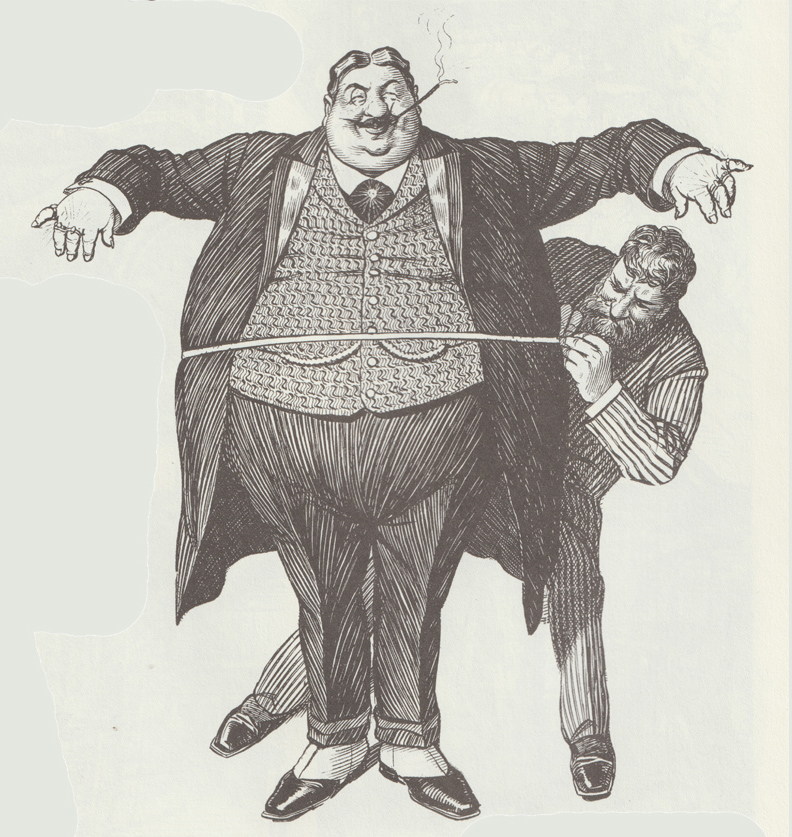
A more recent application of this technology was when designers used fiberglass as the body material for the Corvette sports car. This car could not have been made if science had not developed the technique of encasing woven fabric in a hard plastic resin. What kind of world would we live in if we did not have the Corvette to make great racing car movies like Smokey and the Bandit? (*) I shudder to think of a world like this. Or should I say I “shuttle” to think of such a world.? Ha-Ha.
It was the technology of weaving that launched the Industrial Revolution. Cloth manufacturers used a roomful of looms and connected them with steam power to weave cloth on a massive scale. These new weaving mills were some of the first opportunities for women to work outside the home. These were the first sweatshops, which some historians claim exploited women and children before there were labor laws. This was when the concept of Bring Your Child to Work Day was established. You don’t need daycare if the child is working 12-hour shifts, right alongside you.
Much of our modern lifestyle was created by nature’s creatures who used this weaving technology. Therefore, we owe a huge amount of gratitude to birds and insects who showed mankind how to use weaving to improve our world. Fish are not too crazy about man using this technology, but they don’t get a vote. Without nature’s creatures showing us the concept of weaving, we might be forced to wear blue jeans that have shredded legs. Or wear bikinis made from grass and coconut shells? Or worse, can you imagine sitting in a high-rise office building, in a corporate board meeting, and be wearing an itchy 3-piece animal skin suit? Who wants to live in a world like that? Thank you, nature, for showing mankind how to weave. I hope I have set the record straight.
After further consideration, I may need to re-think the grass and coconut shell bikini idea. That might be a nice look. Oh, and happy April Fool’s Day. I celebrate it daily.
(*) Author’s note: Smokey and the Bandit did not use a Corvette in the film, but I just liked referencing that movie.
And back to me. I admit I had no idea there were so many different species of weaver birds; the Wikipedia page is well worth a look. Also, there is actually very early evidence of fish nets in Germany, not France. But I am guessing your biggest take-away from this post will be a sense of amazement that any one person holds such a wealth of information. 🙂 And again, Happy April Fool’s Day!




hahaha, I Loved it. Made me laugh. Very clever.
Speaking of weaving, I finished weaving off some hemp towels….Never again.
It was a 3 ply given to me and never again, oh, already said that! will show pictures once they are hemmed.
Happy Fools Day to you also 😆
Thistle be a beautiful day!
While there is tea there is hope!
Ooh, hemp! Those will be interesting to see!