Knitting for Victory in the Early 1940s
As the 1940s dawned, my “adopted ancestors“, Minnie and Olive, were still interested in neckwear fashions —
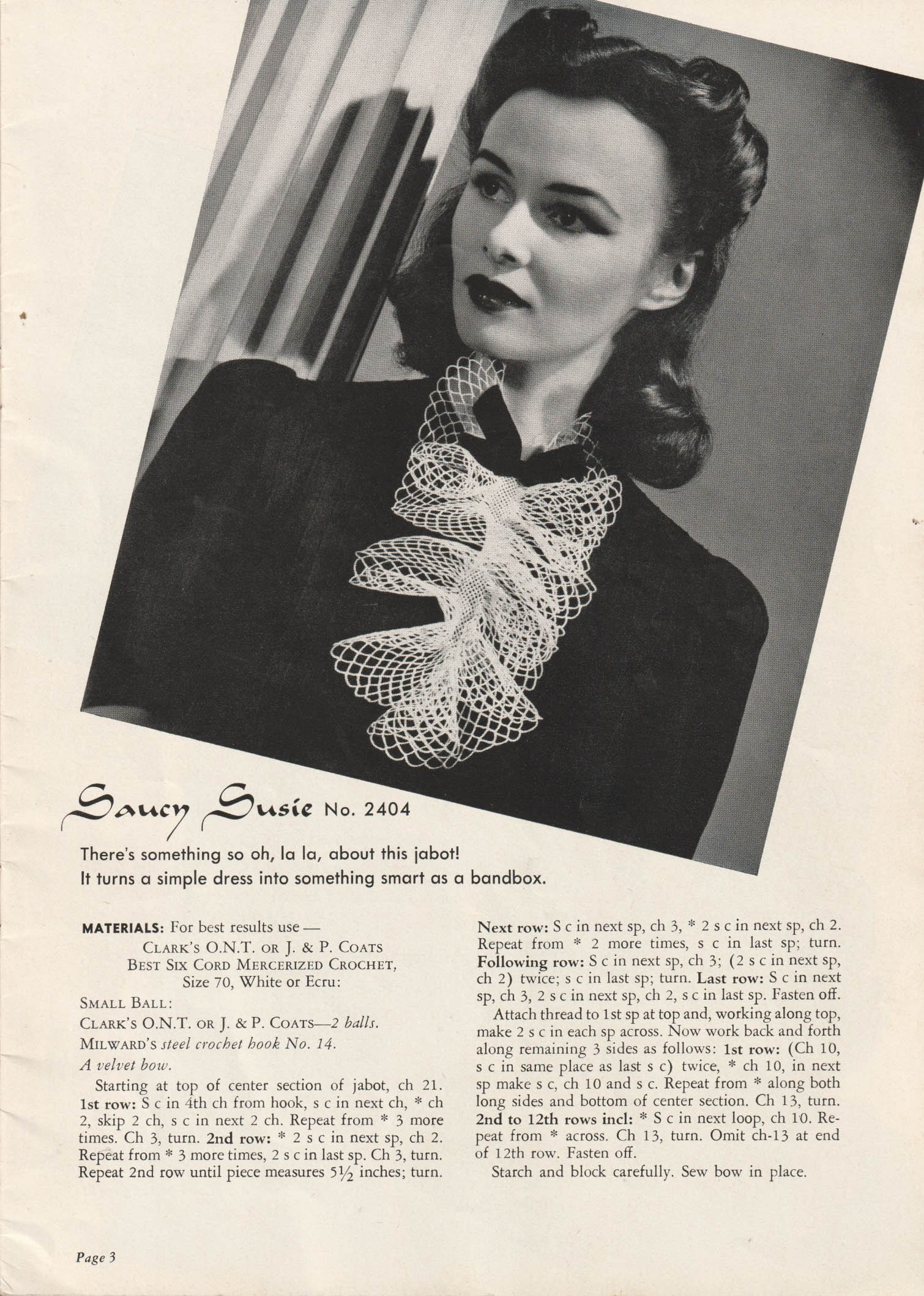
“Saucy Susie”, from the 1940 pattern book Neckwear News! in Crochet.
— but just two weeks after the attack at Pearl Harbor, they had picked up patterns from the Red Cross, to knit gloves and socks for service men.
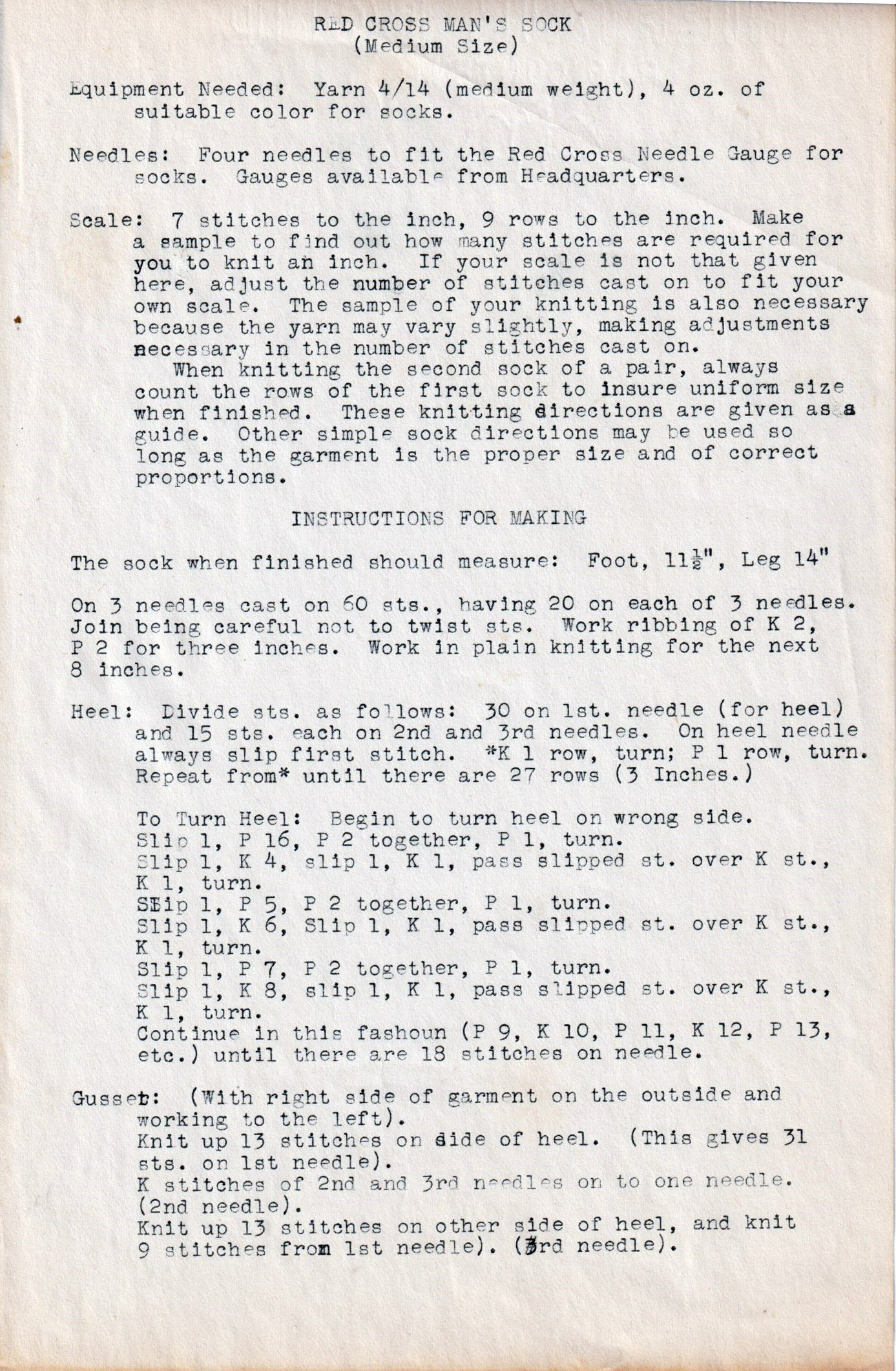
Red Cross sock pattern.
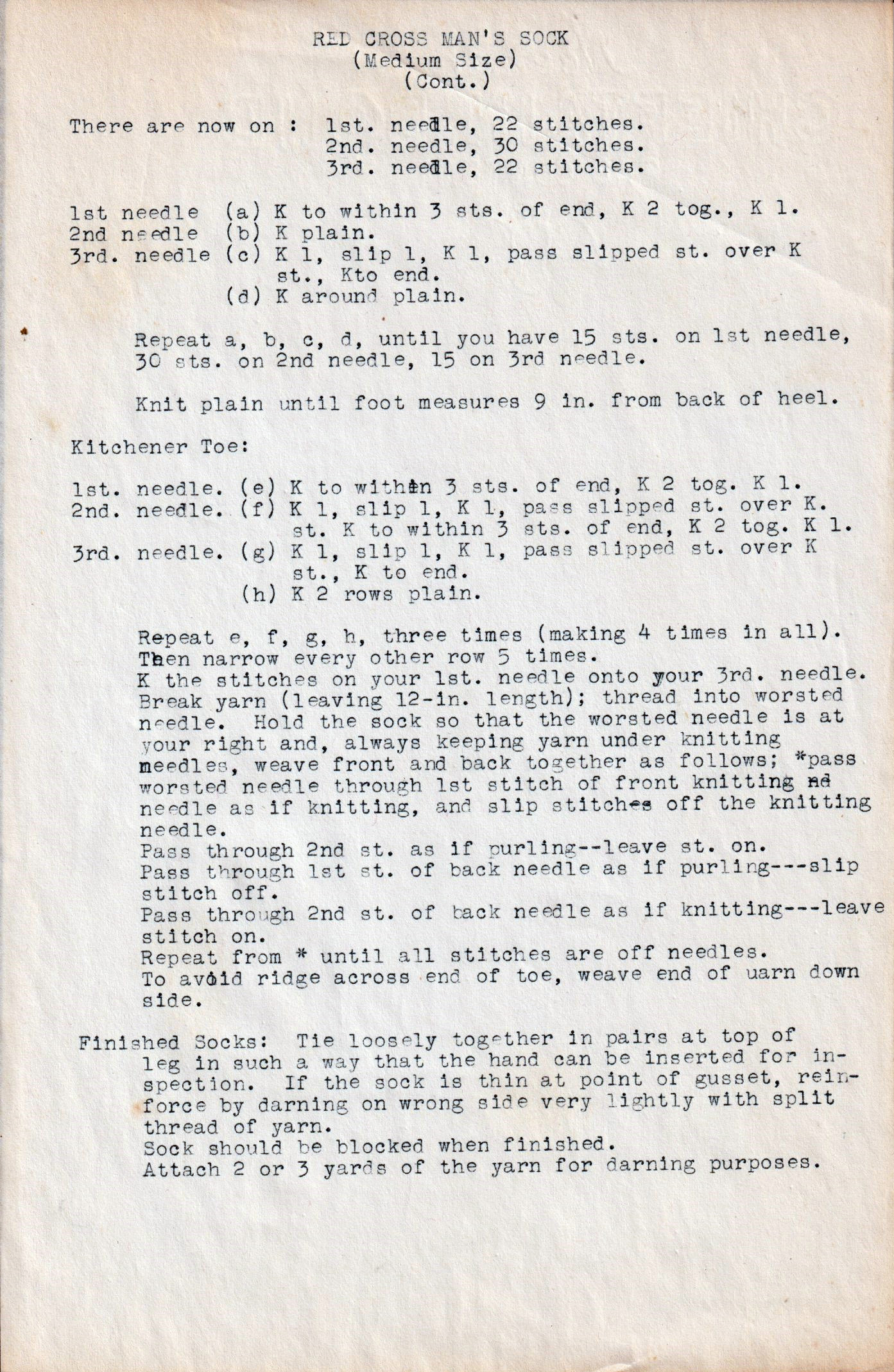
Red Cross sock pattern, page 2.
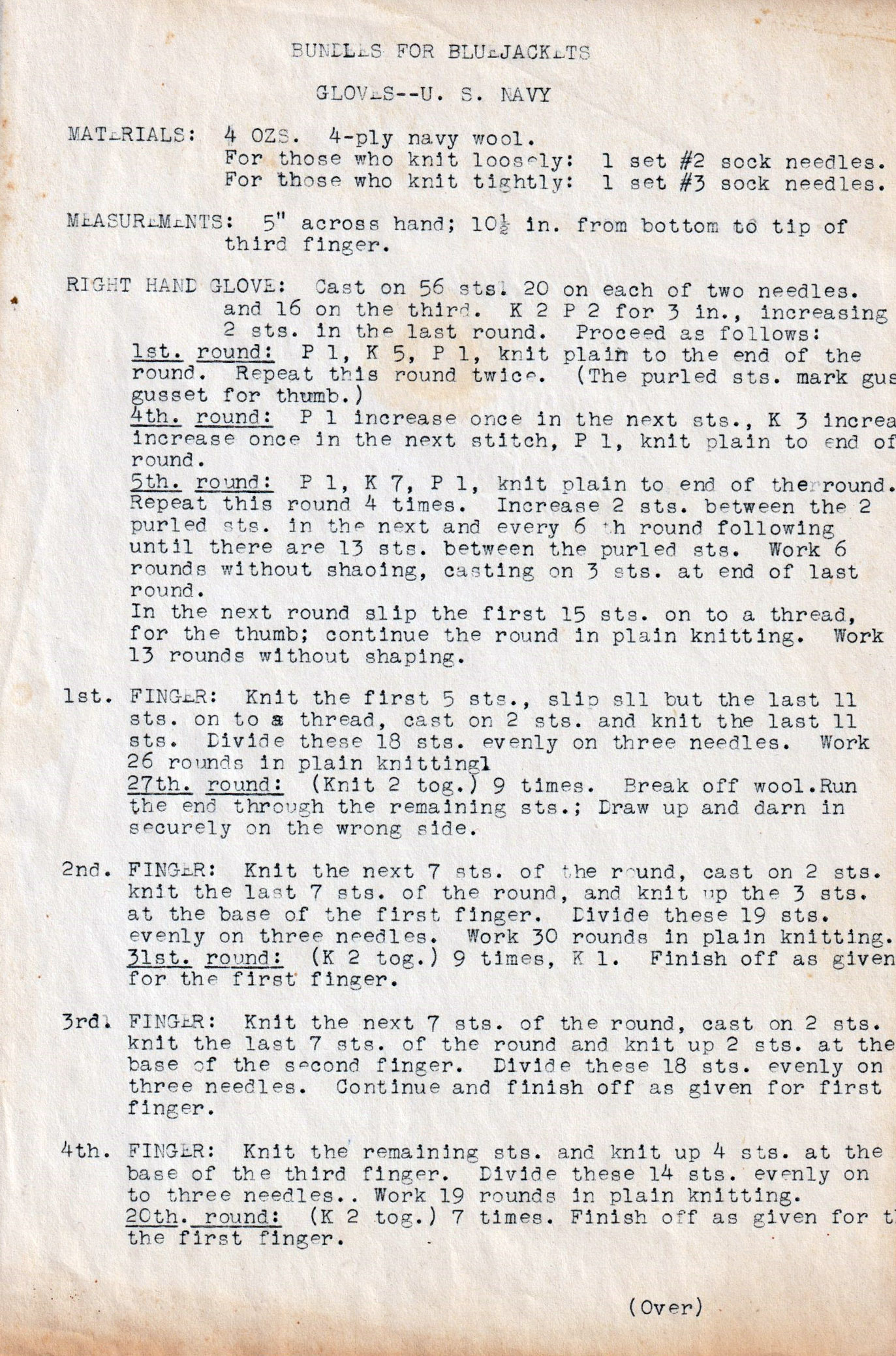
Bundles for Bluejackets glove pattern.
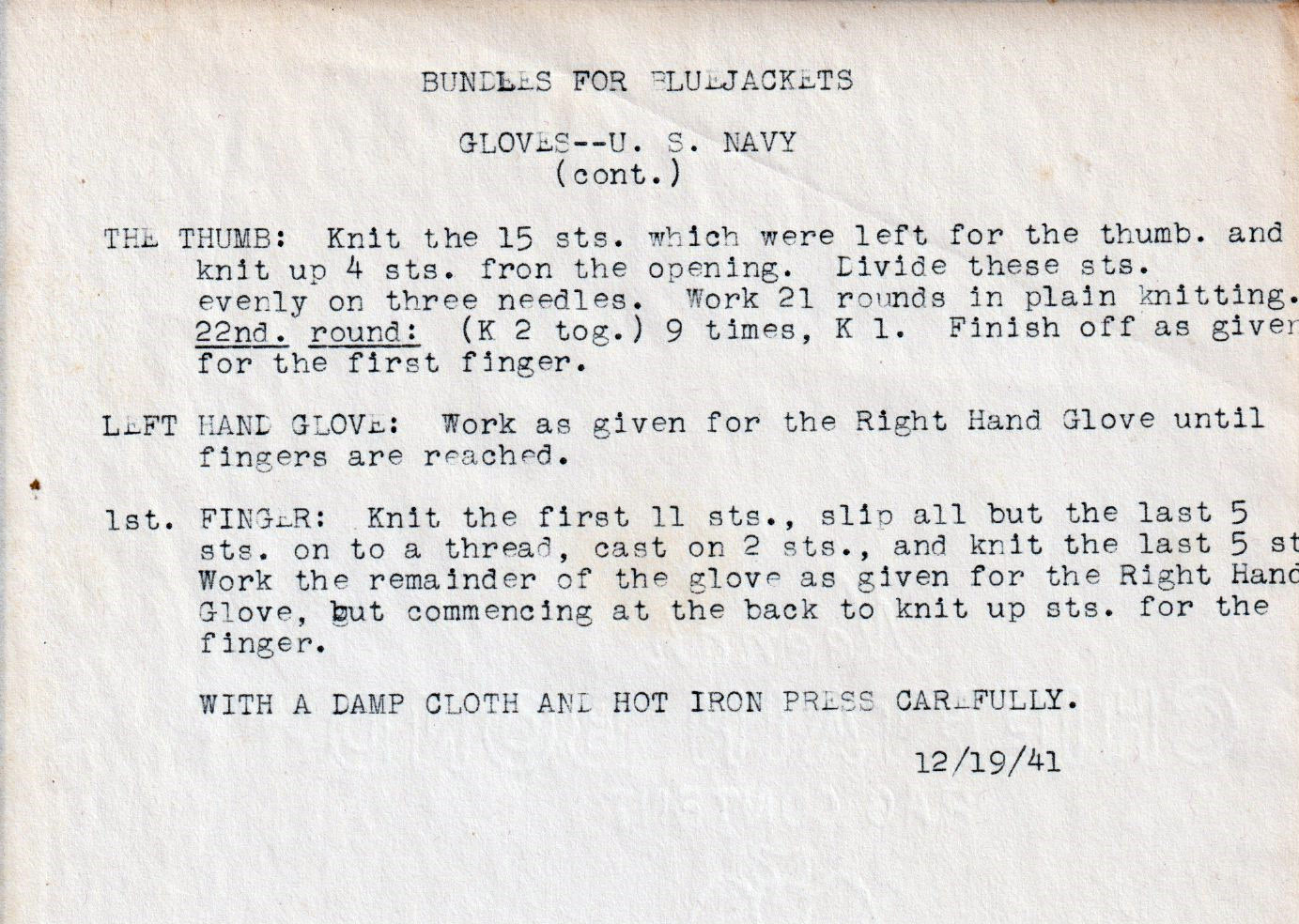
Bundles for Bluejackets glove pattern, page 2. Note the date typed at the bottom.
Seeing these patterns reminded me of some articles in our own family archive. My father-in-law was in high school (in Canton, Ohio) when WWII broke out, and his high school newspaper often reported on knitting circles that sprang up in the school.
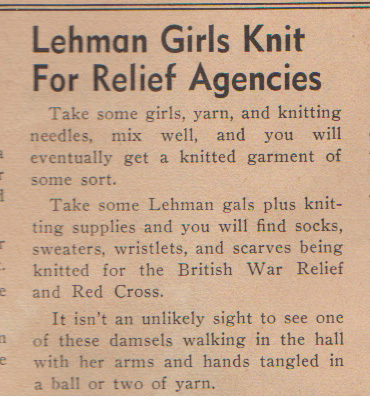
In May of 1941, high school girls were knitting for relief organizations overseas.
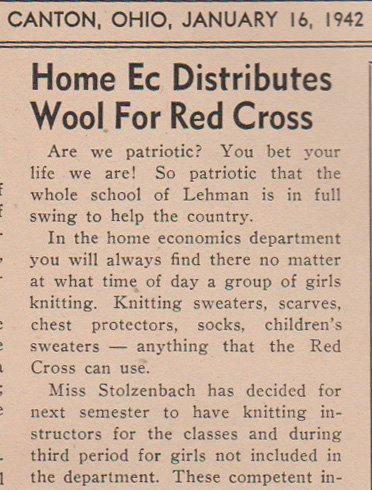
High school knitting for the Red Cross.
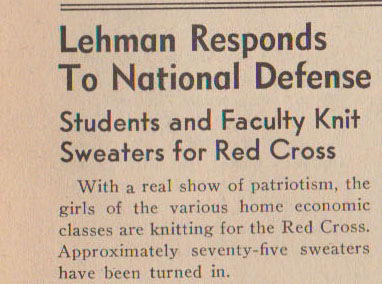
Two weeks after the previous report, 75 sweaters had been knitted. Clipping from Jan. 30, 1942.
A related item in the Minnie and Olive collection was this book of 22 patterns from 1943, with a ruler for knitting gauge right on the cover. In the back, Minnie had kept a record of their knit items. Apparently they had received skeins of yarn, and then returned the knitted items. By October of 1942, Minnie had knit 27 pairs of gloves and 5 pairs of socks! The ladies continued to knit for service men and for child refugees into 1945.
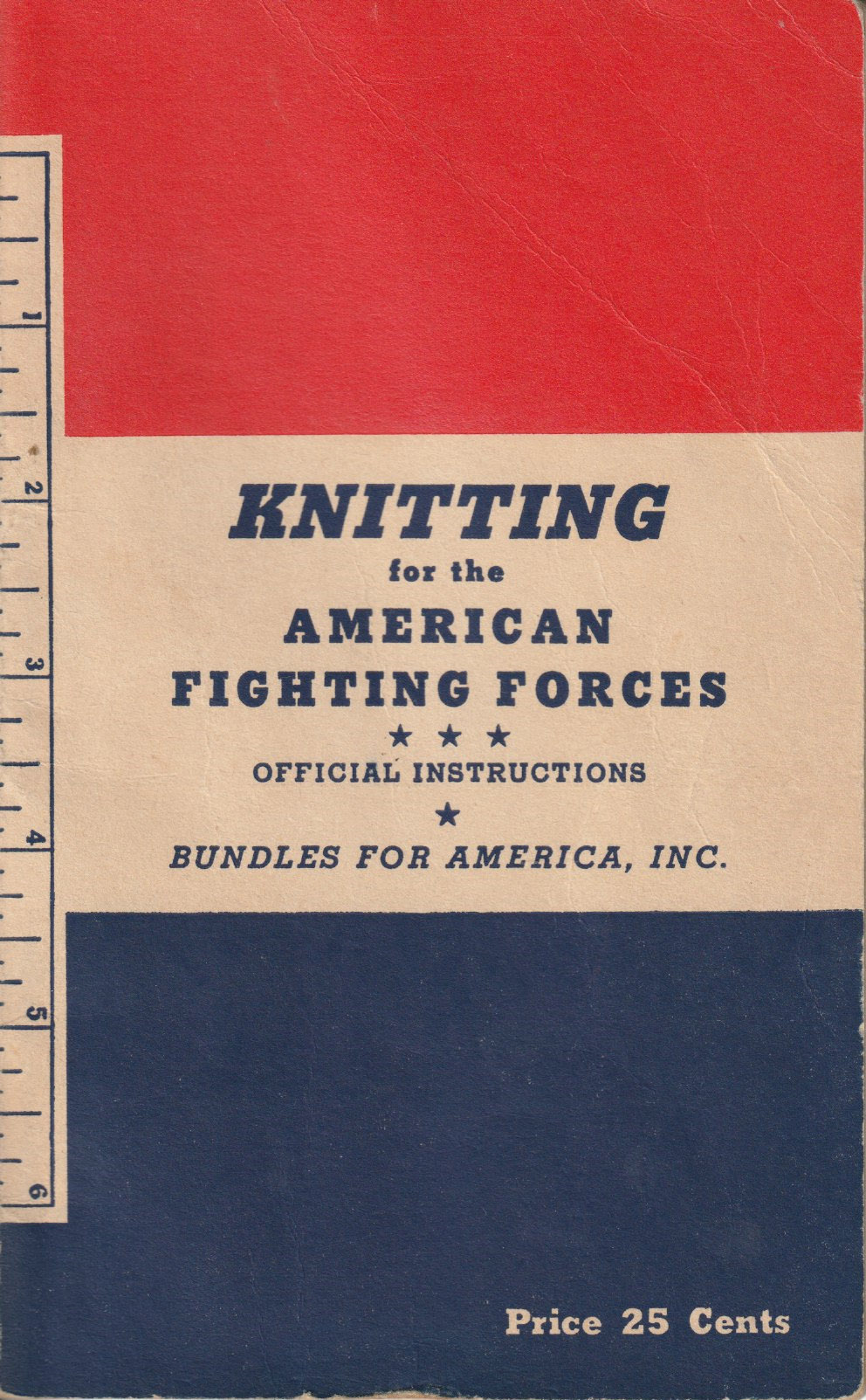
Knitting for the American Fighting Forces, 1943.
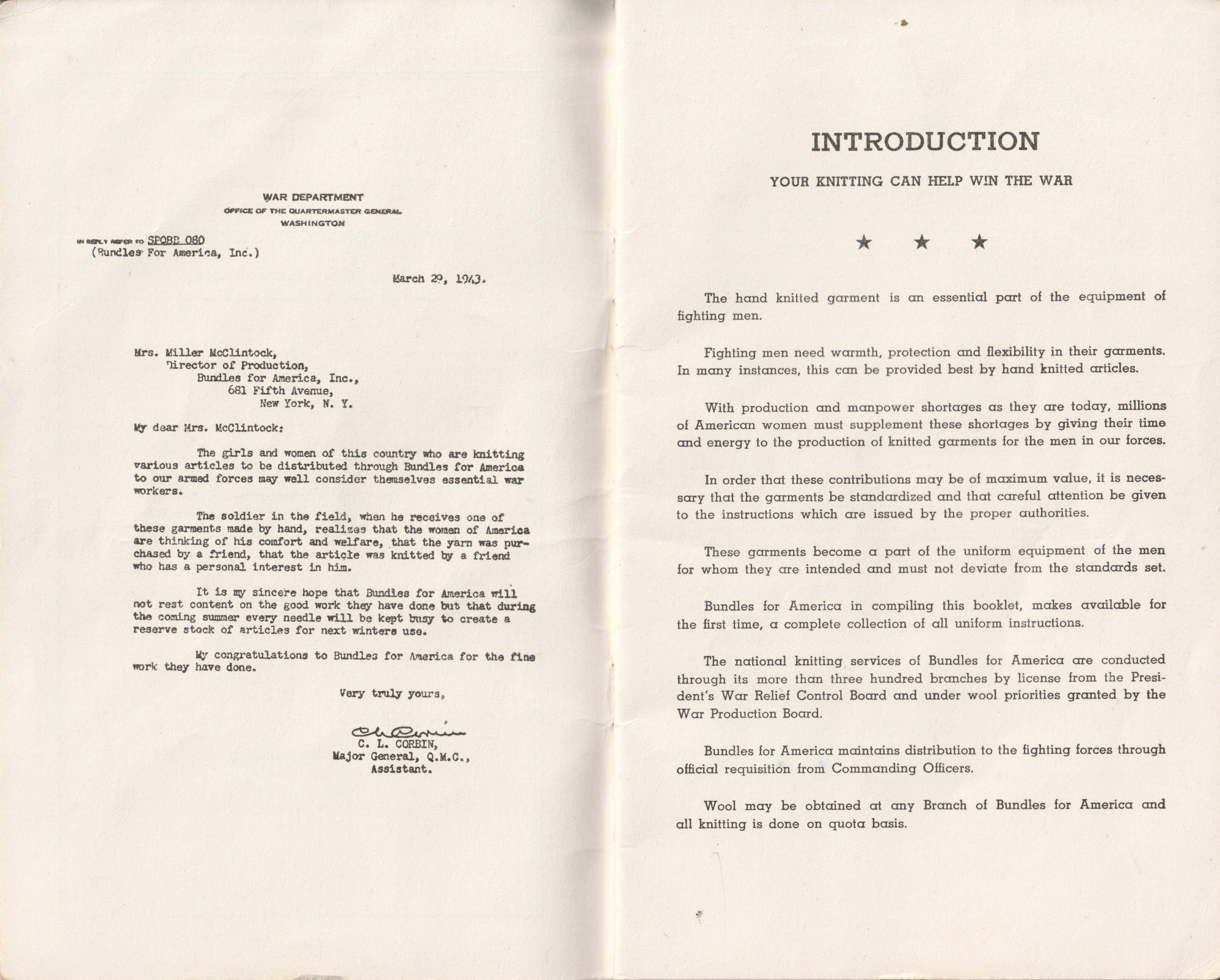
The importance of hand knit items to the soldier.
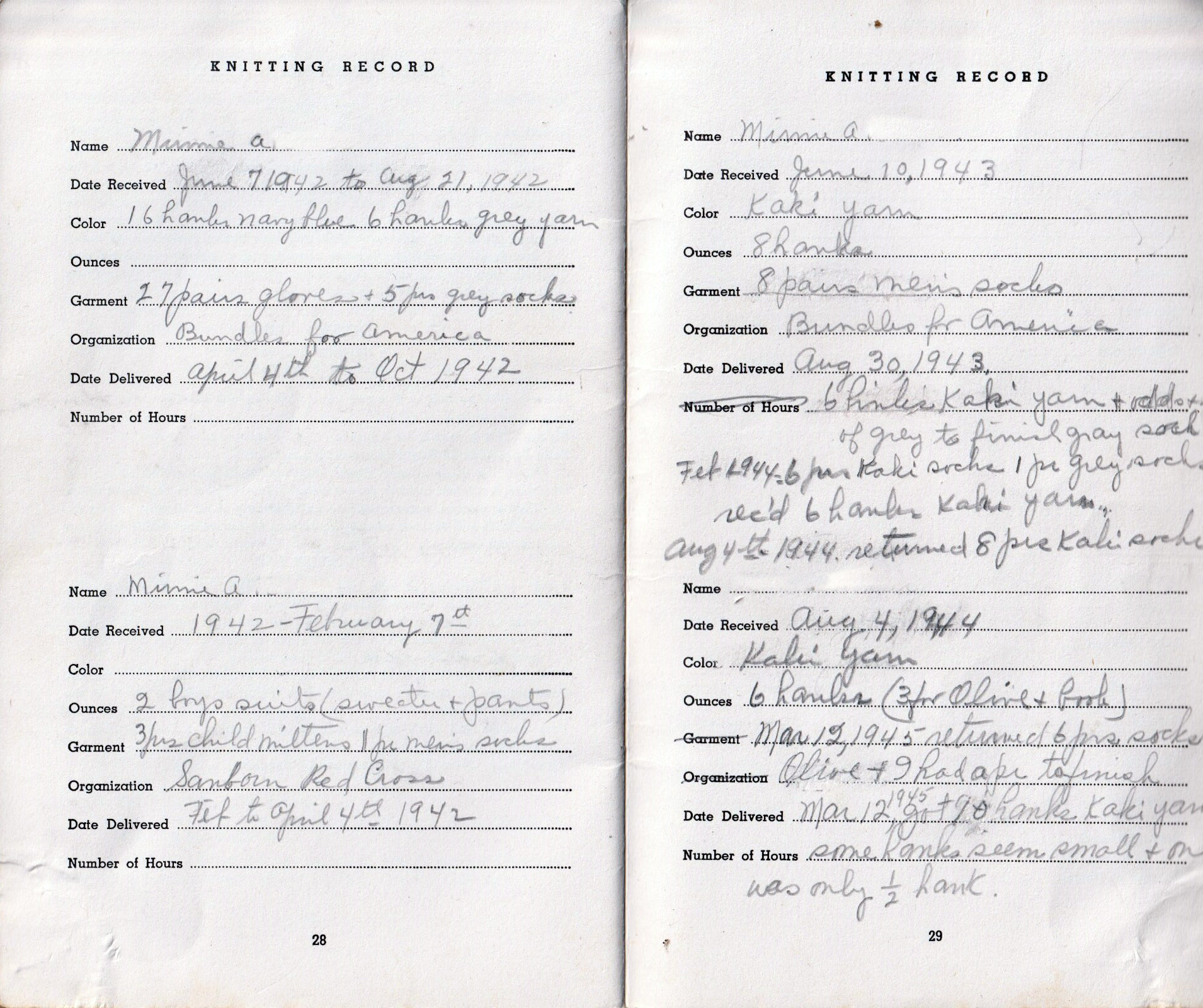
Minnie and Olive’s knitting record.
Looking for more information on knitting for the Red Cross and for Bundles for America, I found these very interesting articles:
That first article clued me in to a great poster:
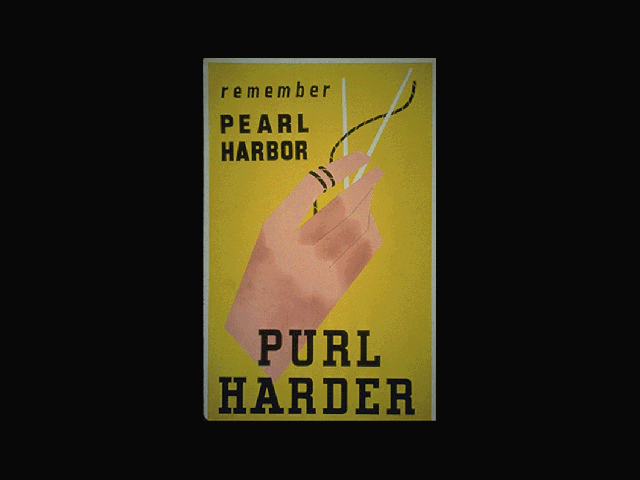
Purl Harder, from the Smithsonian Institution
Speaking of propaganda (or shall we call it patriotism promotion?), the yarn companies quickly jumped onto the bandwagon, with red-white-and-blue covers for their books, patriotic pattern names, and vaguely home-defense backdrops.
This book of men’s sweaters looks to me like a few quick changes were made to appeal to patriotic fervor. This cover image with the civilian defense sign is the only obvious reference to the war.
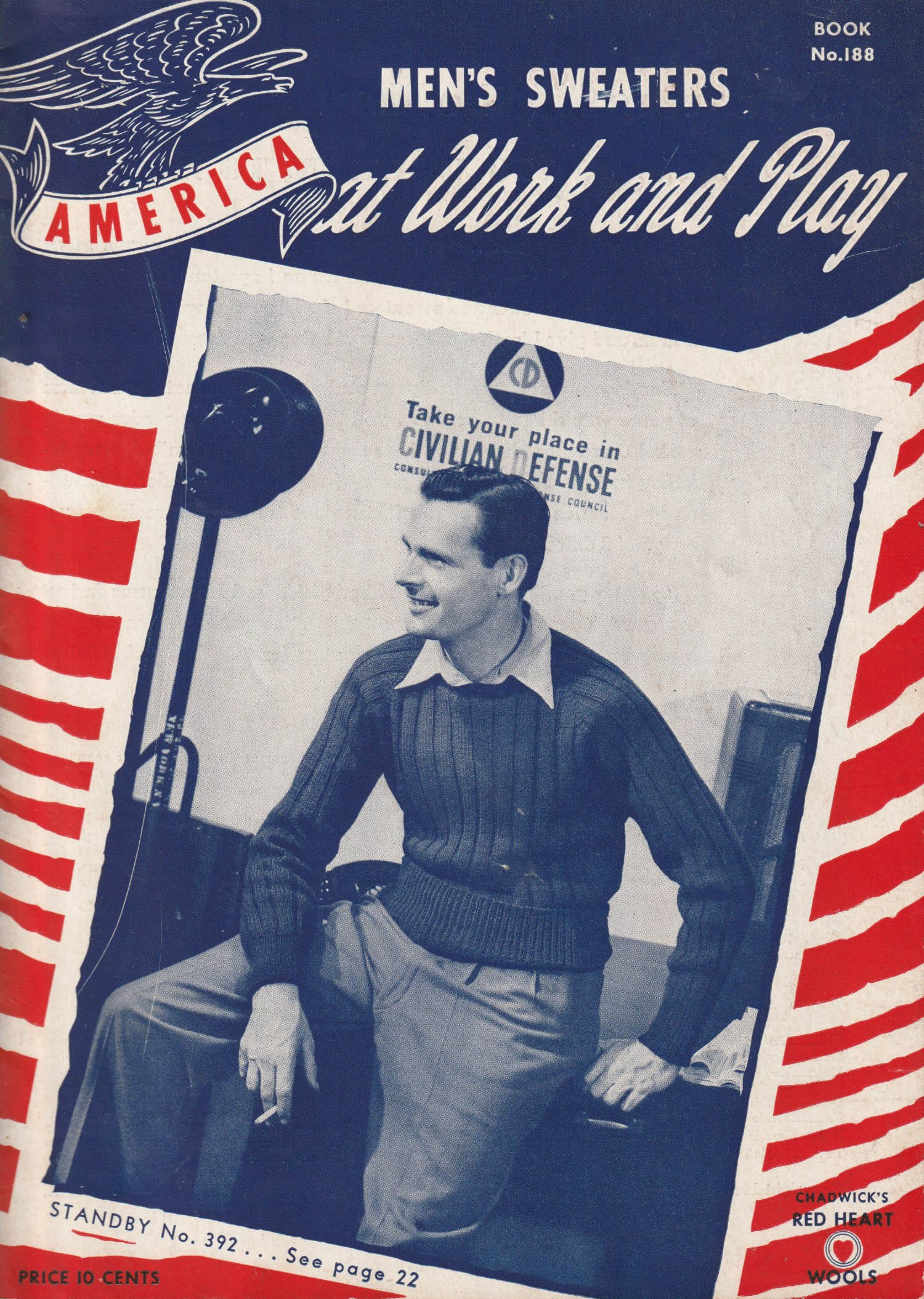
America at Work and Play, Men’s Sweaters, 1942, The American Spool Cotton Company.
Here we have the “Victory Vest,” which I would lay odds was renamed from “Ivy League Vest” right before publication.
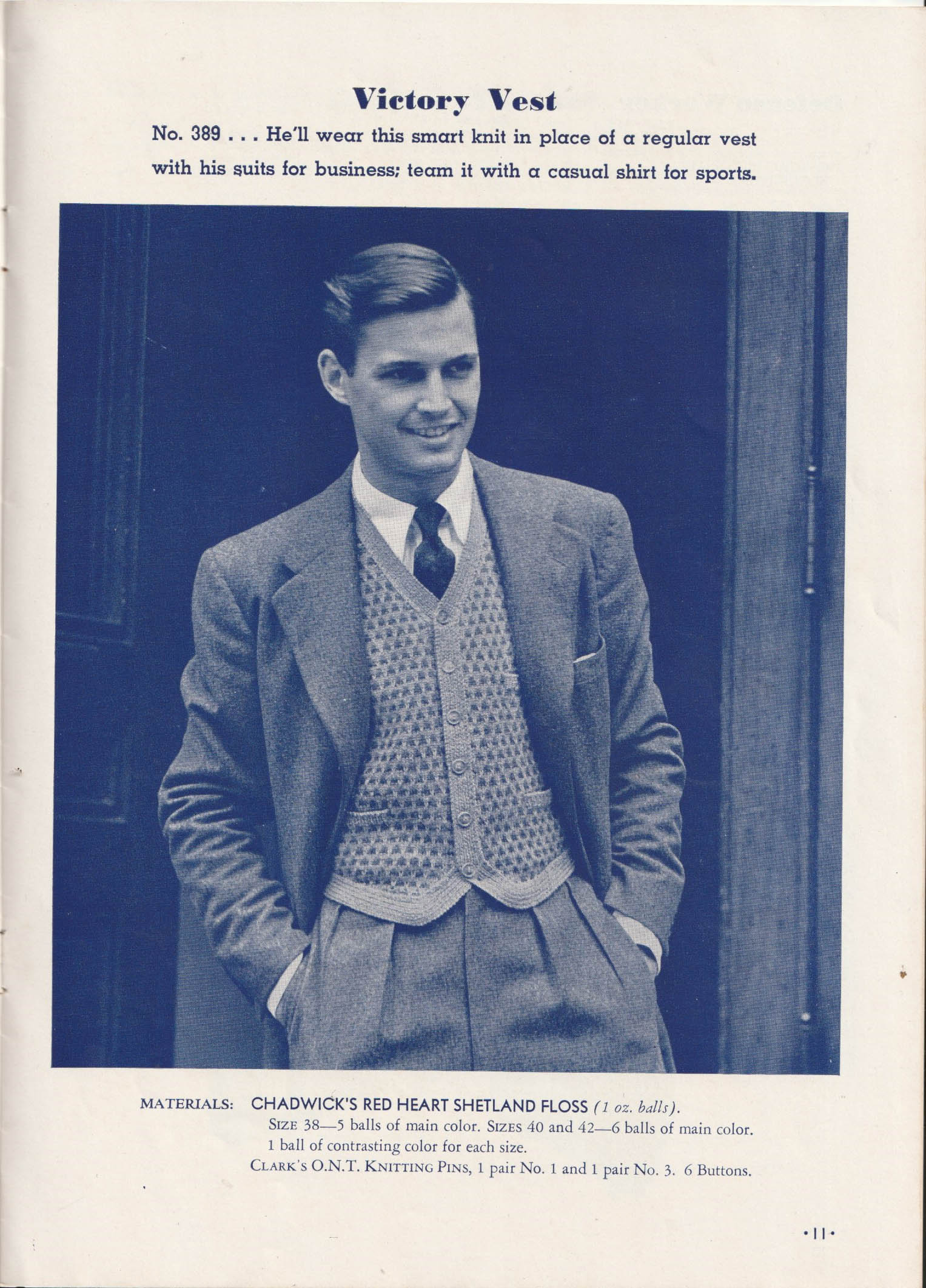
“”Victory Vest”, from America at Work and Play, Men’s Sweaters, 1942, The American Spool Cotton Company.
And here is “Defense Worker,” possibly originally named “The Architect.”
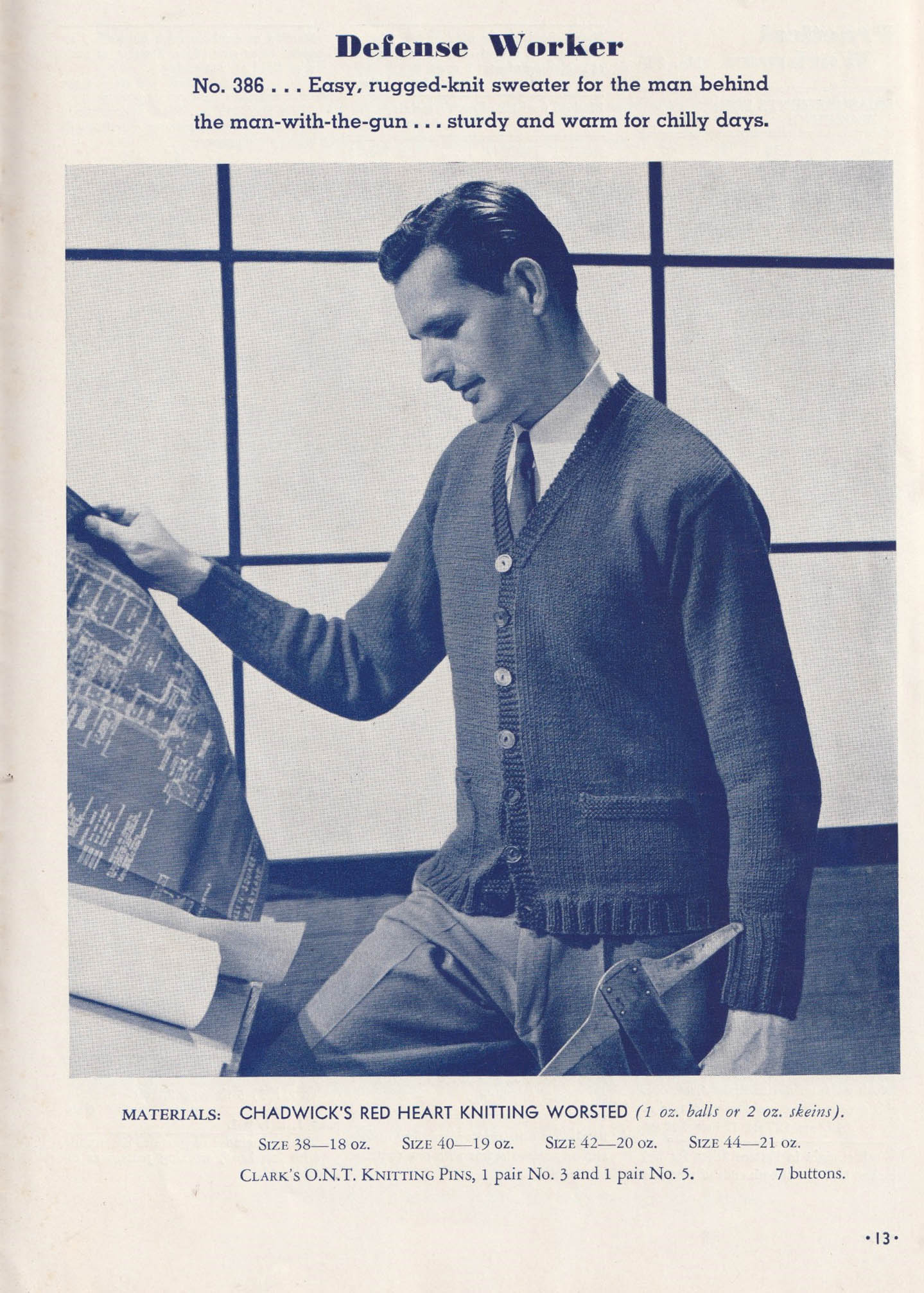
“Defense Worker” from America at Work and Play, Men’s Sweaters, 1942, The American Spool Cotton Company.
The entire book is available online at the Antique Pattern Library, if you are interested in seeing more: Men’s Sweaters at Work and Play.
This related book of women’s patterns has many more allusions to the war in the photo backdrops.
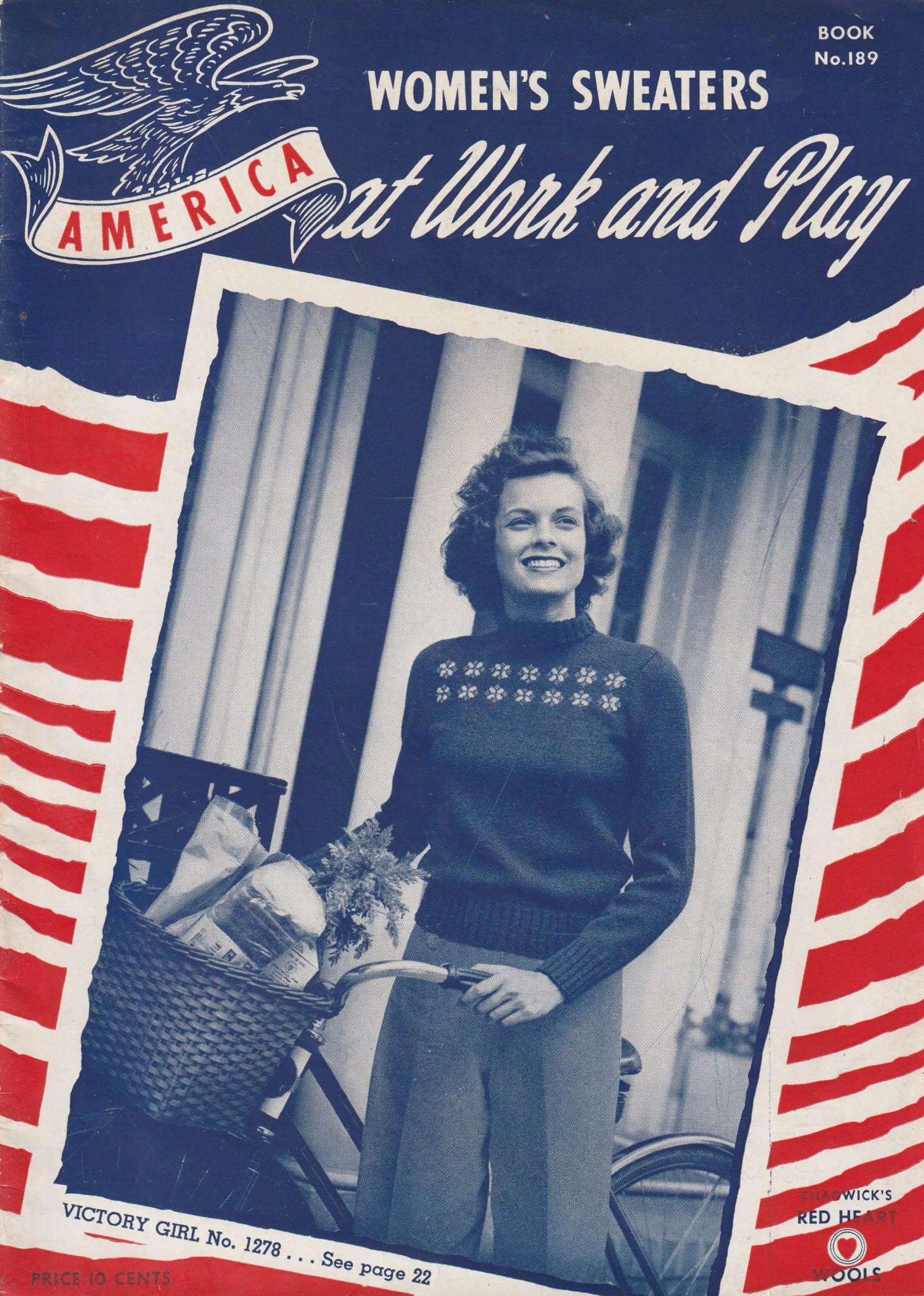
“Victory Girl” from America at Work and Play, Women’s Sweaters, 1942, The American Spool Cotton Company.
Again, I would not be surprised to find out that “Victory Girl” was renamed from something like “Philadelphia Story” (because she looks like Katharine Hepburn) shortly before publication!
This one, “Best Pal,” is my favorite, with its Rosie-the-Riveter-type feel. I love those work pants she is wearing!
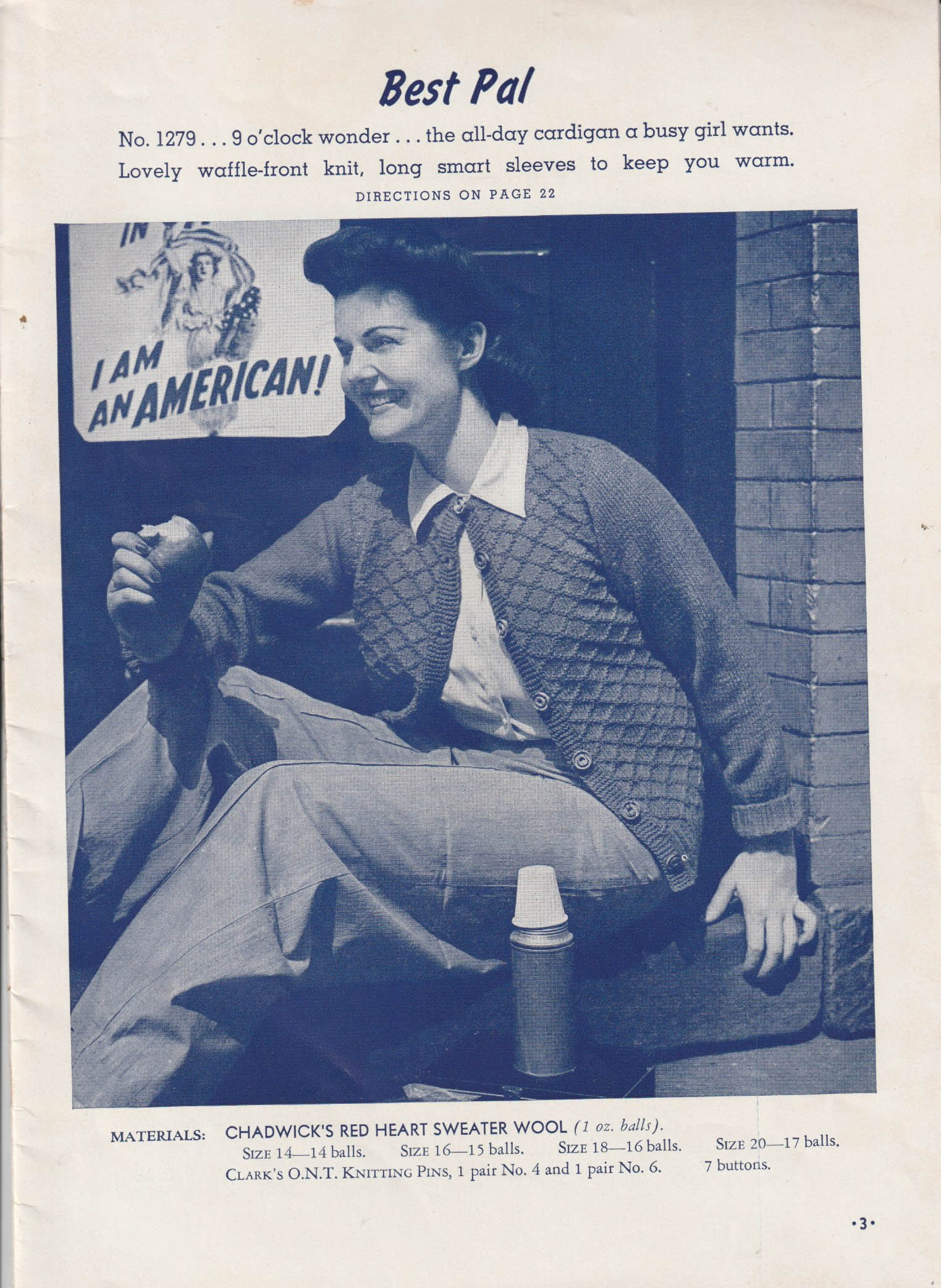
“Best Pal” from America at Work and Play, Women’s Sweaters, 1942, The American Spool Cotton Company.
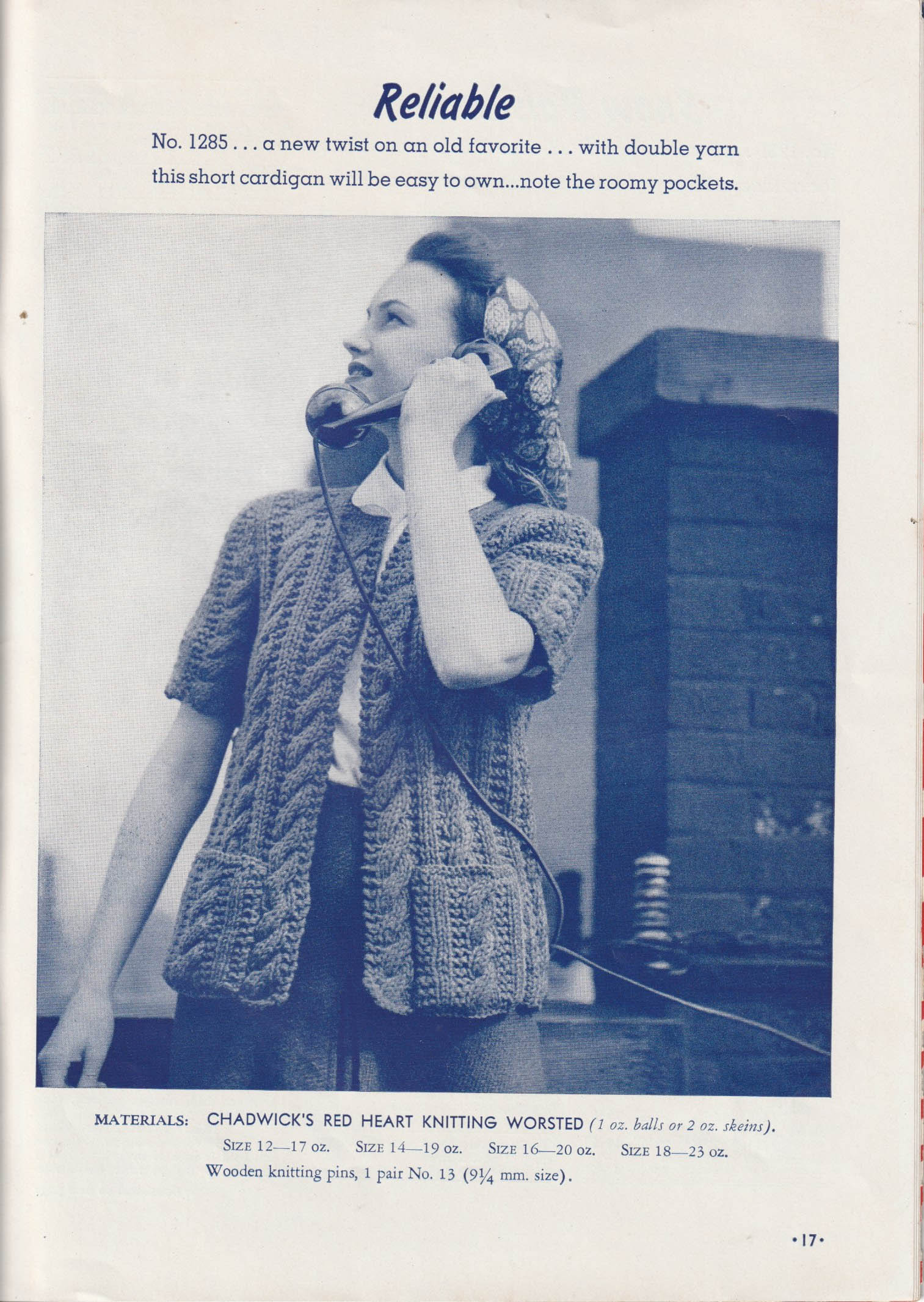
“Reliable” from America at Work and Play, Women’s Sweaters, 1942, The American Spool Cotton Company. I am guessing she is supposedly spotting and reporting on enemy aircraft going over.
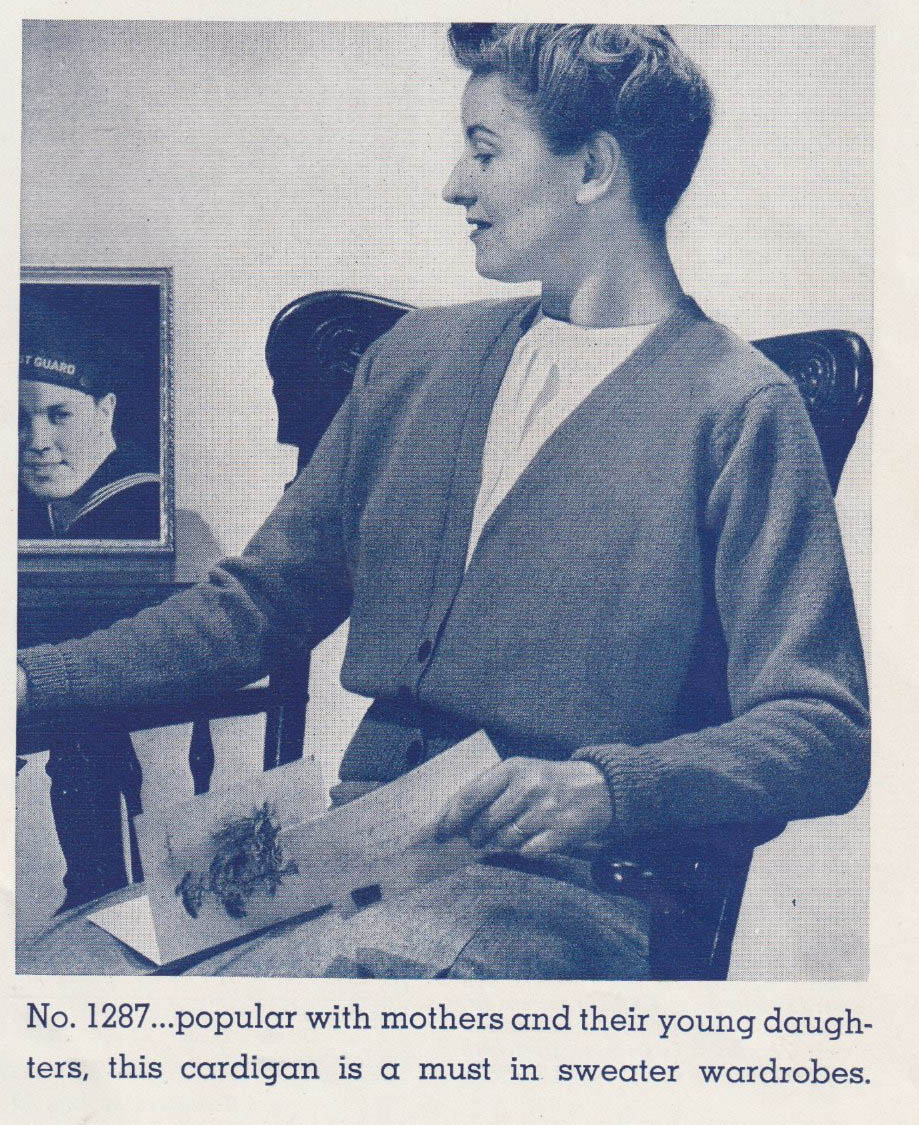
“Best Beloved” from America at Work and Play, Women’s Sweaters, 1942, The American Spool Cotton Company.
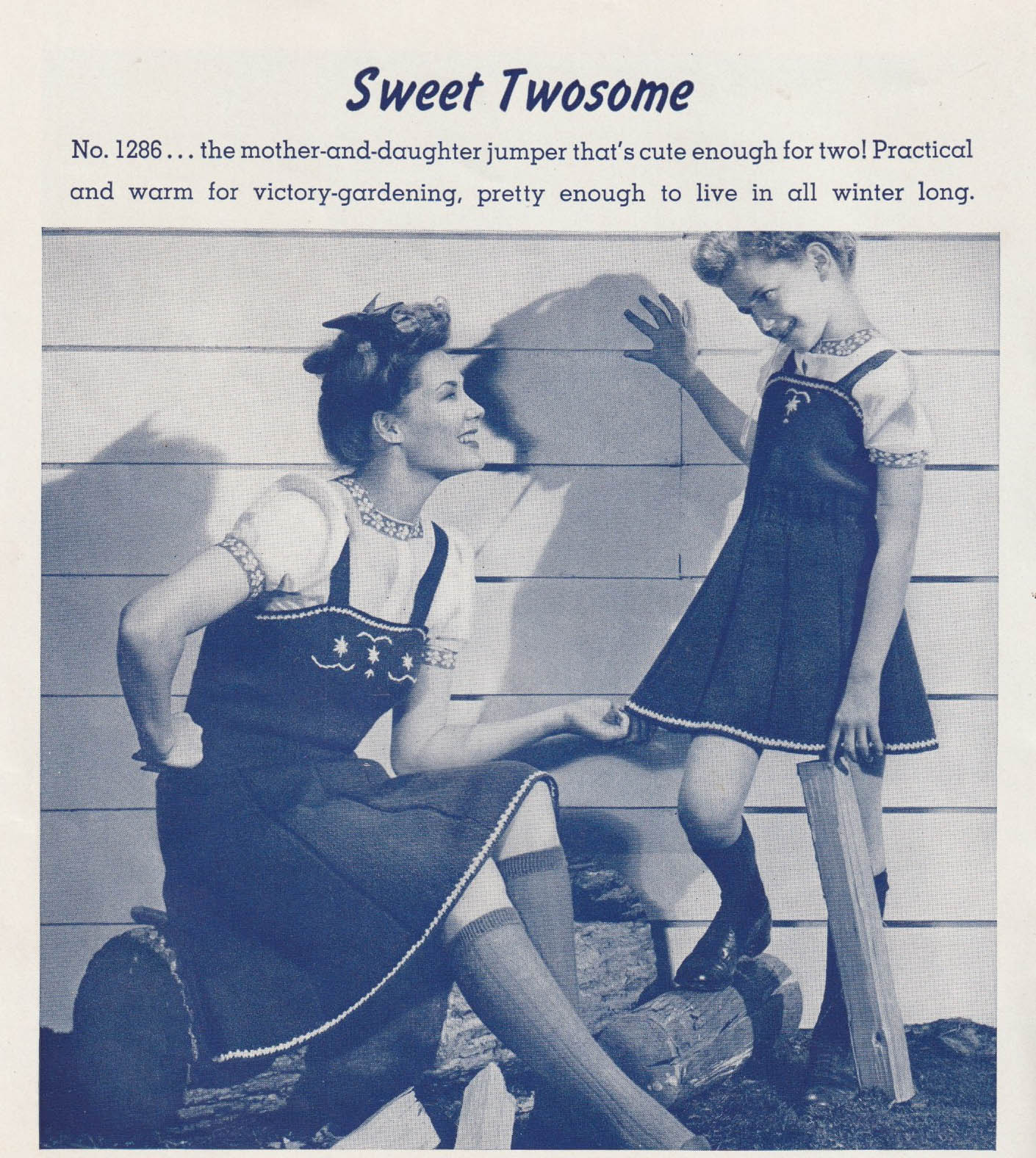
“Sweet Twosome” from America at Work and Play, Women’s Sweaters, 1942, The American Spool Cotton Company. You are supposed to wear these as you do your victory gardening!
This book of homemade gifts included a section for people in the service.
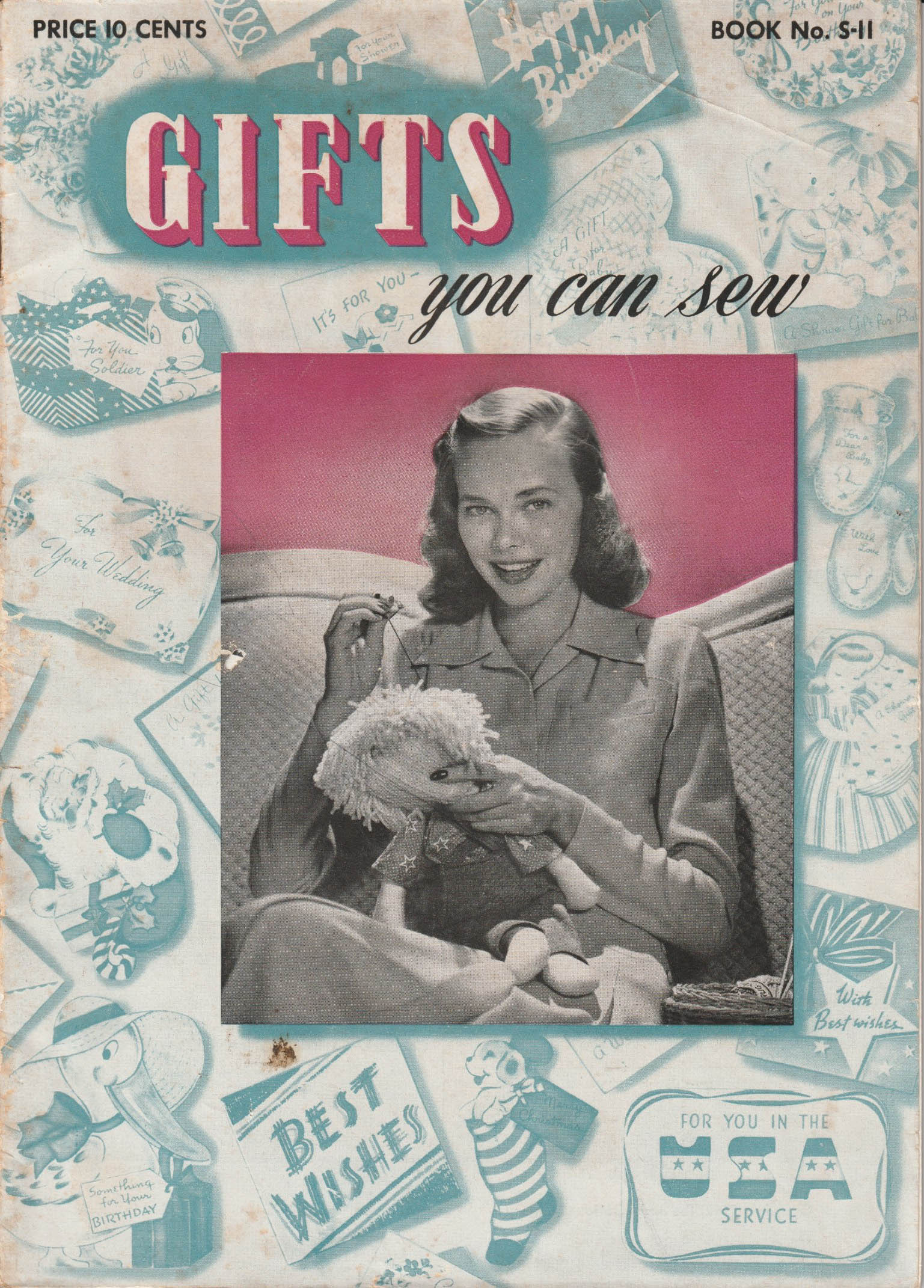
1942 Gifts You Can Sew, The Spool Cotton Company
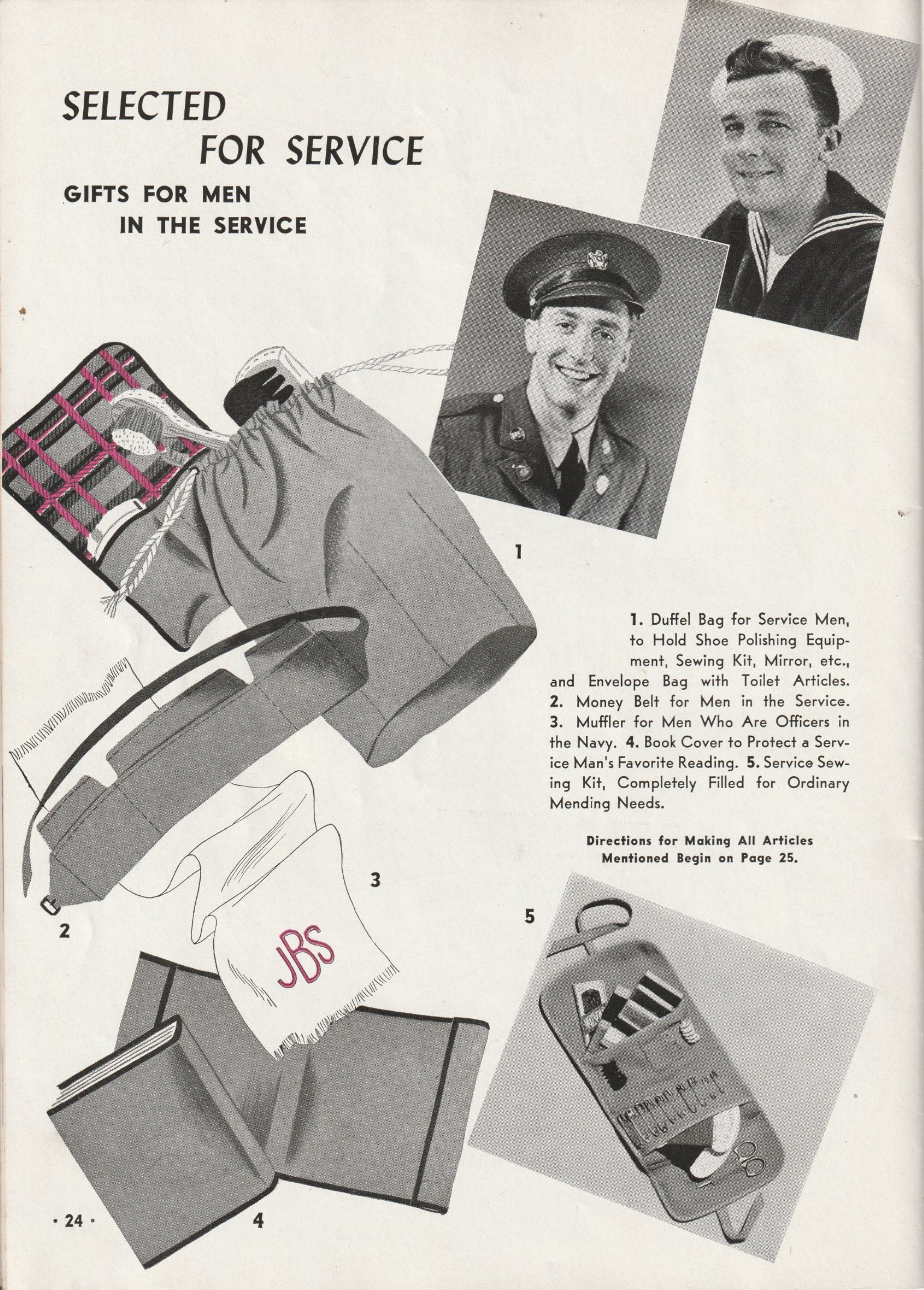
1942 suggestions for service men’s gifts.
So that is a quick look at knitting for service men and support people in the World War II era. Next, we will look at the post-war era and baby boom!



I love the “Best Beloved” sweater. A must have for your sweater wardrobe! While I’m sure in that time and place they were very serious about their sweater wardrobes, all I can think is that I live in Texas and it’s too hot for sweaters 97% of the time. I believe I currently own one sweater.
I would be interested to know how many of the socks and gloves, that these women so proudly made and donated, actually got delivered into the hands of our military. You would certainly have felt honored if you knew your work was beneficial, if only in reminding them of home.
You have a good point — I wonder if I can find any memoirs from recipients, saying what they thought of their gift, and if it fit, or if they traded amongst themselves…
I read that entire article from LIFE and was so surprised to see all the emphasis on the North West , Seattle and even Enumclaw! Interesting indeed, wonder if anything/war could energize
people in such a way today.
Well there were the masks when Covid-19 started, and I made a bunch, but I know for me that was much less effort than knitting even one pair of socks would have been! I think we are so used to mass-produced stuff that it would be hard to think of something we could make ourselves and contribute.
You are right! I totally sloughed off those 2 years and just hunkered down. Masks vs sweaters/socks etc no contest..
Given the fact that it would take me a very long time to knit one pair of socks, much less gloves(!) I am in awe of Minnie’s accomplishments. Some of those sweaters definitely look familiar from some of the patterns my grandmother had!
It would be great to know if she was working from the same patterns!
The history and images were so cool to read/look at over breakfast this morning. Remember Pearl Harbor and Purl Harder – that was some brilliant crafting related propaganda for the war effort!
Such an interesting post! My mother did a lot of knitting during the war. She said it helped to calm her nerves during the London air raids. She continued to enjoy knitting things for the family until she lost her eyesight due to macula degeneration when she was in her 80’s. I have drawers full of sweaters and cardigans that she made.
Wow, what a slice of history! I would love to see the things she made!
Obviously those women were better at knitting than I am! Gloves are a challenge! But I suppose knitting such things was way more common then.
Pingback: Guest Post: Never Give Up | Deep in the Heart of Textiles
Pingback: 1940s Pattern Books from the Home Front | Deep in the Heart of Textiles