Favorite Textile Books from the Year
These are three great textile books I came across this year. Maybe one would make a great gift for a fellow textile aficionado, or maybe you need one for yourself!
Costume and Fashion
Costume and Fashion, Rijksmuseum, 2016.
There are only 80 garments represented, and they are all European fashion, but what sets this book apart for me, is the layout. Most of the garments are shown in multiple views, with details. And most importantly, the font is legible to eyes over 40!
Almost every garment is accompanied by its representation in art or photographs of its time — as that style appeared in a portrait, a fashion plate, or a political cartoon. There are also 16 spreads devoted to various features of costume, such as lace, buttons, and artificial flowers.
The garments are shown in chronological order, with more information about provenance and sources in the back of the book. I would have liked for the book to have a table of contents or an index, but that’s a small issue.
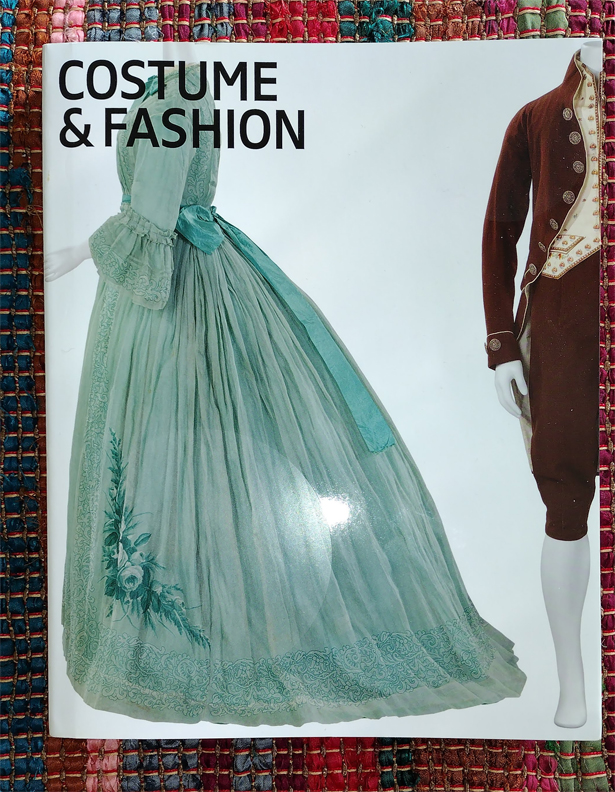
Costume and Fashion, 2016, Rijksmuseum
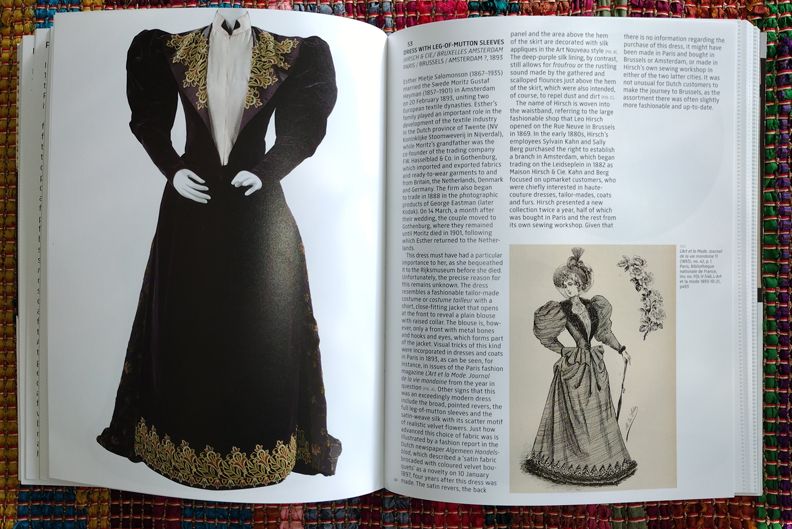
1893 dress with leg-of-mutton sleeves
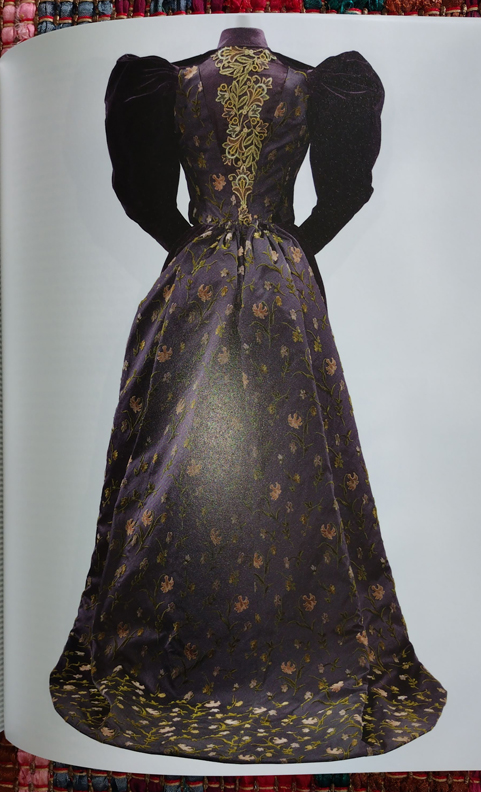
1893 dress, view 2

1893 dress details, satin revers with silk appliques, flounces of silk lining above hem.
Fashion: The Ultimate Book of Costume and Style, Dorling Kindersley, 2012 (Here’s a link to the 2019 edition so you can see more pages.)
I would prefer this to be called “the ultimate book of European and North American costume and style,” but I guess that would make the title a little more unwieldy. And it weighs 6 pounds as is, so I guess they could not include the rest of the world. 🙂
But the pictures are gorgeous — for each era, there are images from contemporaneous paintings and fashion plates, and then photographs once those were available. And besides displaying the usual women’s haute couture, men’s fashion, fancy dress, and sports clothes are covered. There are also feature pages on certain designers, materials, and trends. There is an index, a huge glossary, and the original image sources are given as well, making it easier to track down the image for further research. Overall this is a gorgeous book; one of my absolute favorites.

Fashion: The Ultimate Book of Costume and Style, Dorling Kindersley, 2012
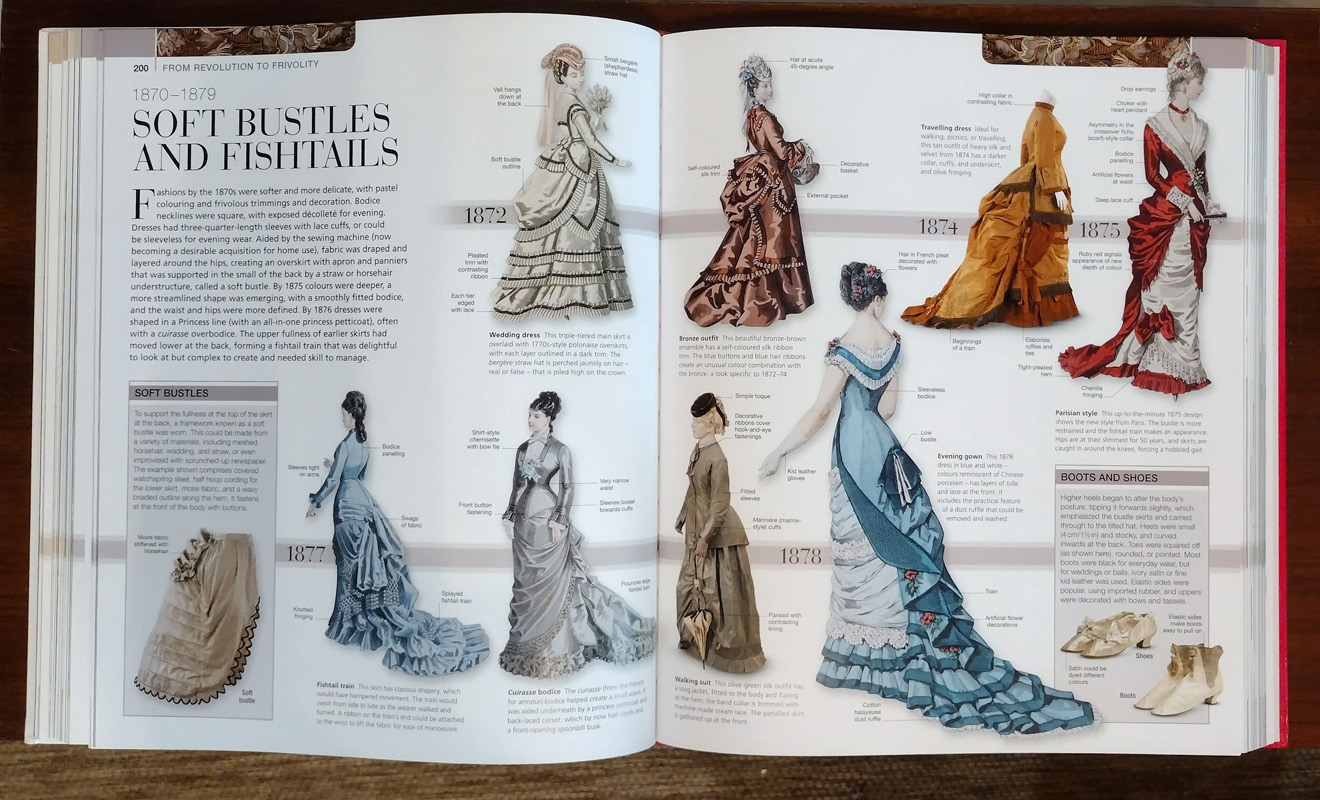
There are timelines showing how the styles changed within each decade…
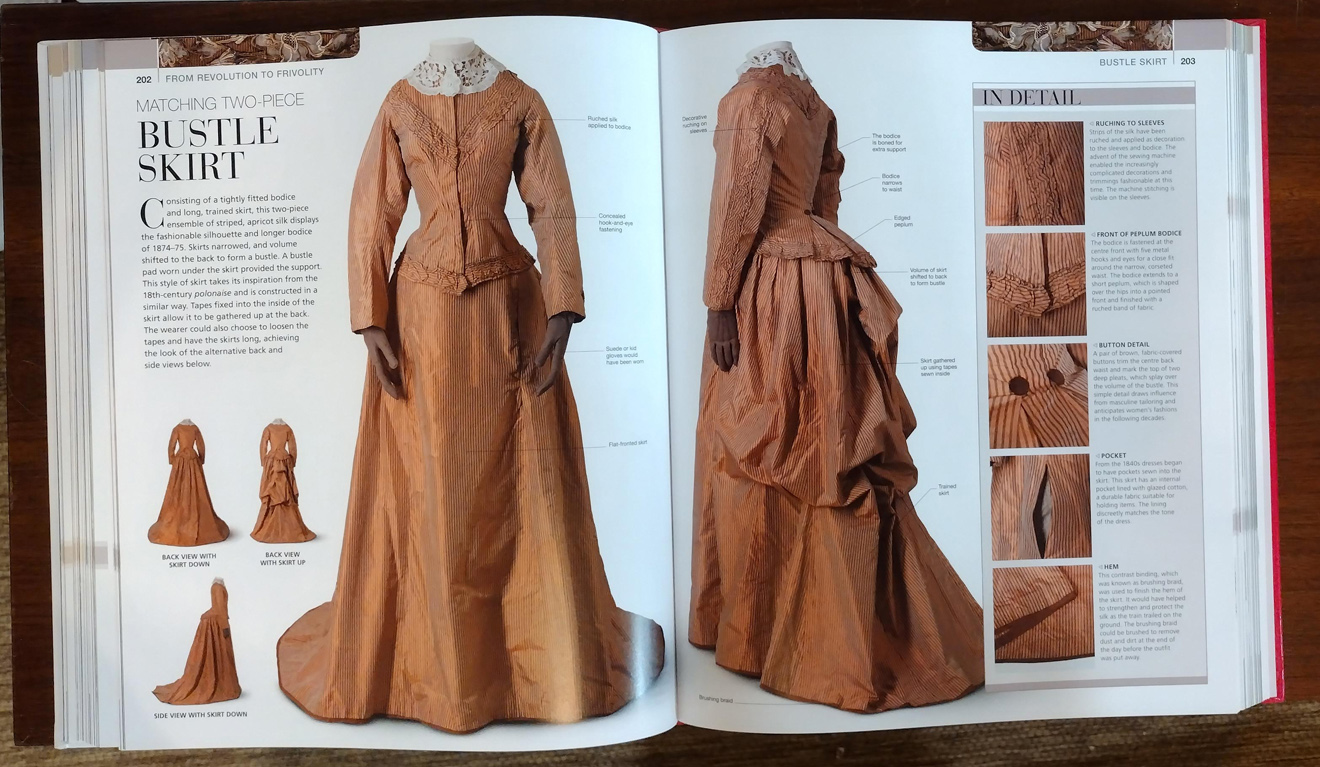
…and photos of actual garments with notes about details.
Dyeing
True Colors, 2019, Thrums Books
This is not an instruction book, but a sampler showcasing natural dye practitioners and entrepreneurs from around the world. Again, we have gorgeous large photos, lots of details, and a legible font! There is an index and a bibliography. The book is hard bound and lays flat.
Each artisan or organization is spotlighted in a section of 4 to 22 pages.
Some of the techniques described:
- creating green dye from invasive plants in India
- contact printing on silk using temple offering marigolds in India
- twining bags from bromeliad fiber in Bolivia
- dyeing with woad in England
- extracting orange and red dyes from lobster mushrooms in Puget Sound
- growing indigo and producing natural indigo dye in Bangladesh
I love to read this book at lunch as an antidote to all the dreadful news of the day. Not only do I learn a lot of history and science, but I find it so comforting to know that there are people around the world who are trying to preserve thousand-year-old traditions, to provide a fair way of life for rural craftspeople, to create sustainable and healthy products for home decor. I think it would be good reading for anyone interested in sustainability or fair trade issues.
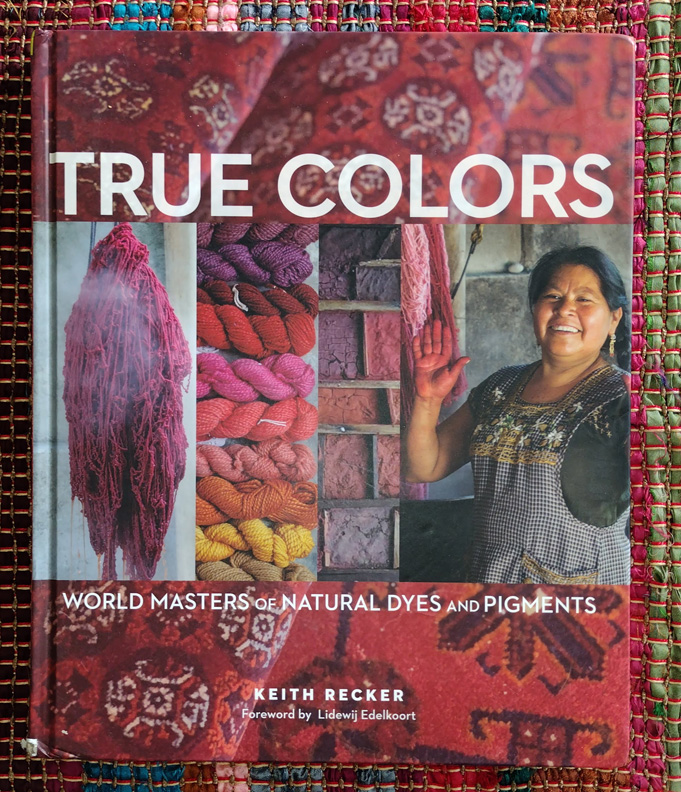
True Colors, Thrum Books, 2019
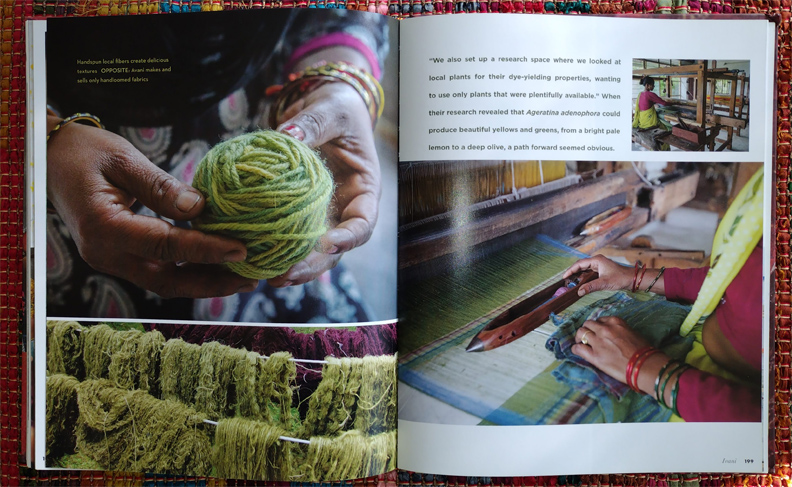
Sample spread showing green dyes from Ageratina adenophora, from the Avani group.
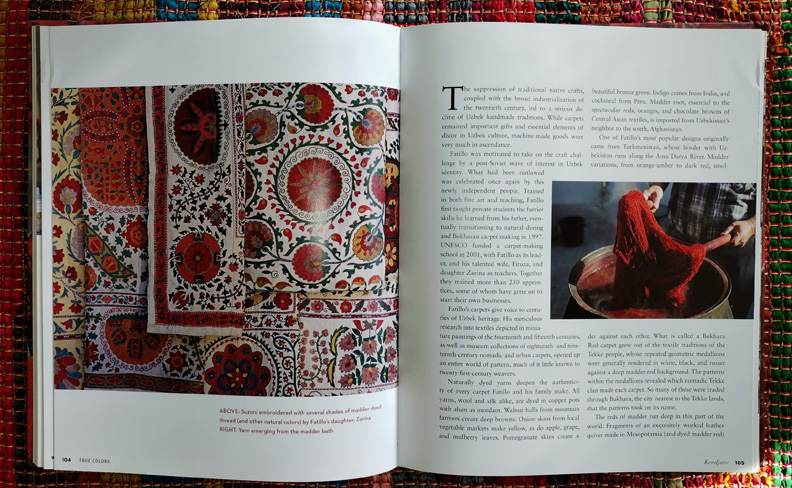
Sample pages showing the Suzani textiles, embroidered with madder-dyed thread, of Uzbekistan.
It is astounding to me, but at this time of year, random books just show up in my mailbox! I assure my husband that I am shocked — shocked! — to find them there! I tell him that probably, while I was online ordering so many gifts for others, my fingers got tired and slipped and accidentally clicked on the wrong item. Or, or, even more likely, the mail order companies just sent me textile books as a thank you.
He is amazed that they are able to find ones that I didn’t already have. 🙂
I wish you a new textile book and time to read it!



OK, I’ve gotta see the whole Kindersley book after looking at the few images on Amazon. Checking to see if my library has it. Thanks for the fun look at these books!
Those mail order elves are hard at work this year, and they just seem to know who needs to get what. Sneaky, too – slipping those best books into packages we think we ordered for others! Thanks for the tips on the books. Two fiction books I have enjoyed, not so much about fashion, per se, but about color are “The Blue” and “The Fugitive Colors” by Genevieve Planche’. I hope you and your family enjoy a lovely holiday season!
I have read at least part of The Fugitive Colors by Nancy Bilyeau, and another one, The Tapestry, which is set in the court of Henry VIII. They held my attention, and I would love to know more about whether her details are historically correct or not. More areas to research! 🙂
Oh, I just looked at the summary and I did read The Blue too. I really liked that one!
Funny, I had the wrong name for the author, oops!
It is the character’s name in the series, and even though I have read the first book and half of the second, I never realized it was supposed to a series until I looked it up! So an easy mistake to make, I think.
Thanks for sharing this idea with these books 📚. Anita