1920s Fashions from an Unlikely Source
In an ongoing quest to make some space on my bookshelves, I am going through our books looking for ones to rehome, and I am starting with the largest books.
Today’s book weighs in at 6 pounds, and it passed through several hands before being given to me, with a “You like old things, do you want this?” comment. It is a giant yearbook of the United States Naval Academy, from 1924, The Lucky Bag.
The first section has beautiful etchings of the Academy buildings, and then it goes on to a large section of cadets’ photos and bios; pretty standard stuff for a yearbook.
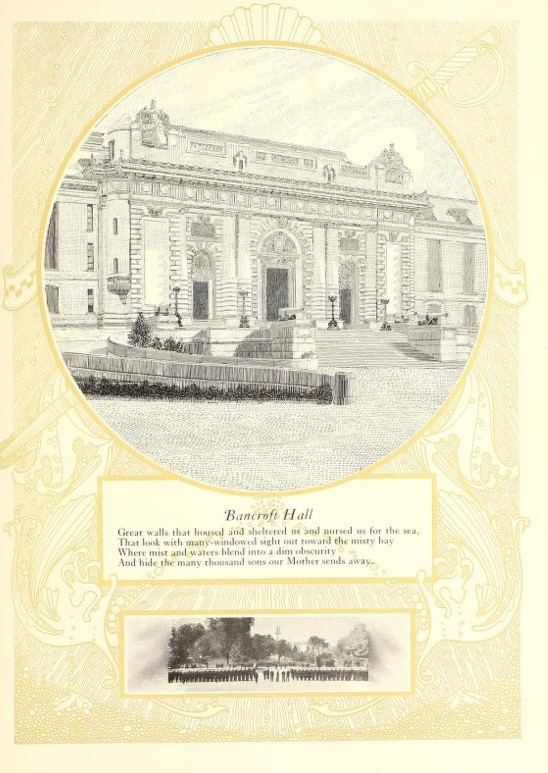
Bancroft Hall, 1924 The Lucky Bag
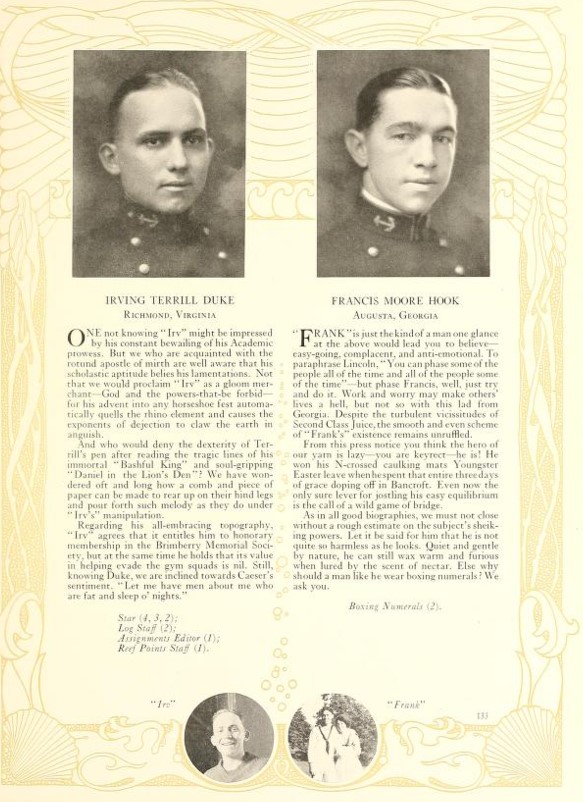
Photos and biographies of two cadets, 1924 Lucky Bag.
But then I tried to read the bios and I was really stumped. How is it that I can understand novels from the 1800s but can’t figure out slang from the 1920s? Here are a few examples:
As in all good biographies, we must not close with a rough estimate on the subject’s sheiking powers. Let it be said for him that he is not quite so harmless as he looks. Quiet and gentle by nature, he can still wax warm and furious when lured by the scent of nectar. Else why should a man like he wear boxing numerals? We ask you.… his advent into any horseshoe fest automatically quells the rhino element and cause the exponents of dejection to claw the earth in anguish.
‘Garbo’ never has to worry about the Academics nor did he rush the ladies. Much rather would he keep company with a ‘Cosmo’ or ‘Post.’
Giving up on being hip enough to understand the kids of the 1920s, I continued paging through the book. Of course there are sections on the sports teams —
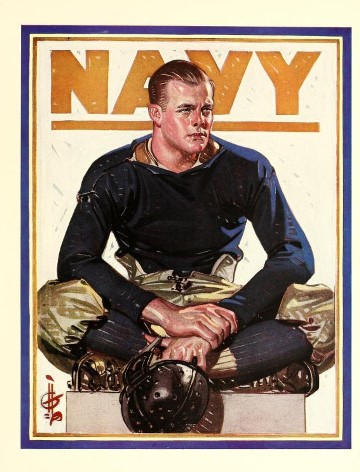
A football here from 1924.
but it was in the Organizations section that I found something I would never have expected — a theatre group, called the Masqueraders, which put on a yearly production, with all the parts played by men.
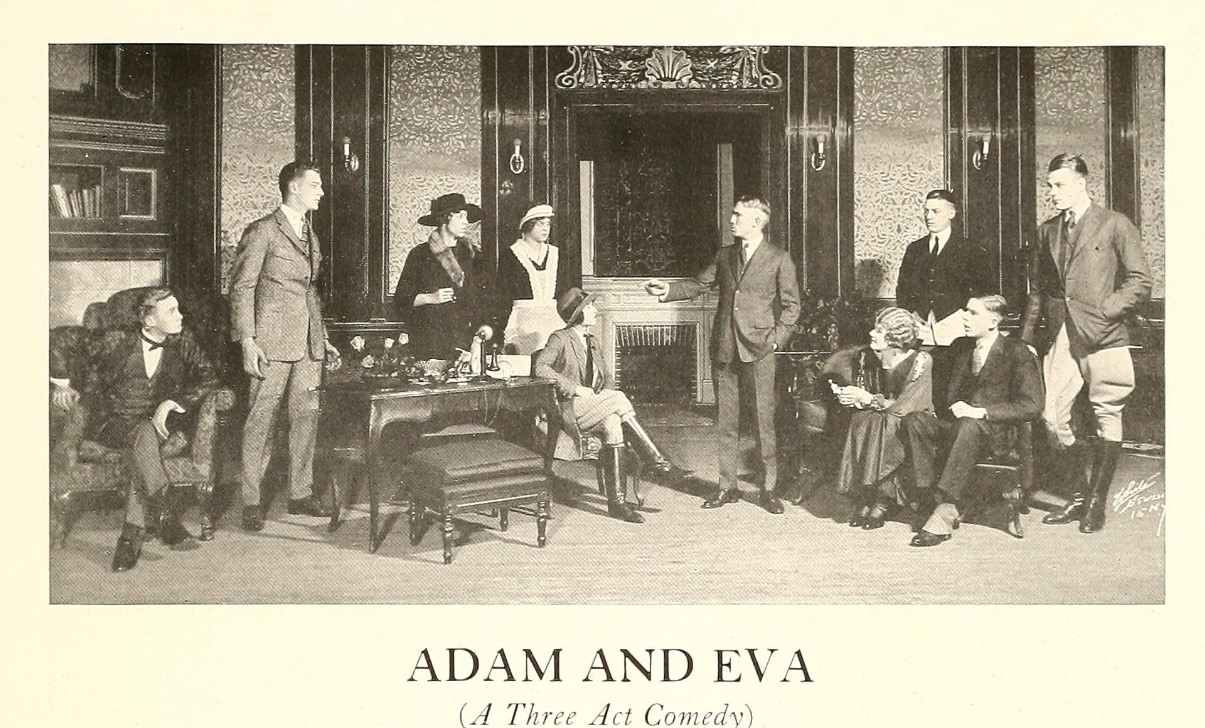
Adam and Eva, 1923-24 season.
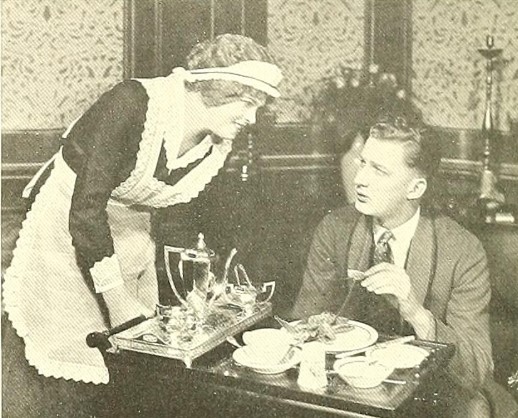
Maid’s uniform in 1923 play.
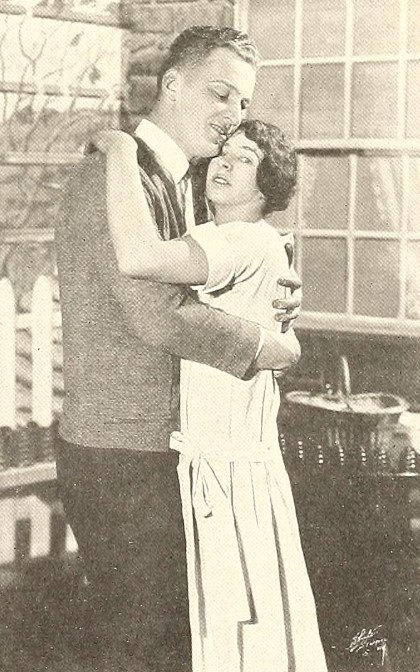
Love triumphs in 1923.
If you had told me that the Naval Academy put on a play with men playing women’s parts, I would have imagined something put together on a whim, with improvised costumes and props. But look how elaborate the set and costumes are!
Fortunately, archive.org has many years’ worth of The Lucky Bag online, so I was able to research the productions of other years. I stuck to the 1920s, when the yearly production was usually some type of comic mystery, with murders, missing wills, false identities and so on. (You can click on the pictures to see a larger version.)

“Come Out of the Kitchen”, 1923

“Stop Thief”, 1920

“Stop Thief”, 1920

“Stop Thief”, 1920

“Full House”, 1925
The articles accompanying these photographs went into more detail about how the plays were chosen, rehearsed, and staged. It turned out these productions were rehearsed for months, and had large crews for lighting, set design, and props. Many of the participants stayed with the group the whole four years they were in the Academy.
And then there is the whole other topic of Gymkhana! I will have to research that another time. 🙂
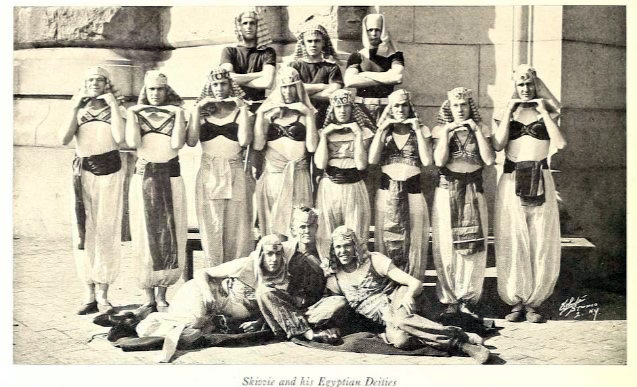
Performing group from the US Naval Academy, 1924
While hunting for more information on the plays, I found some glossaries of the slang terms used! But sometimes the definitions are no more comprehensible than the original slang. 🙂 This list is from the 1923 yearbook:
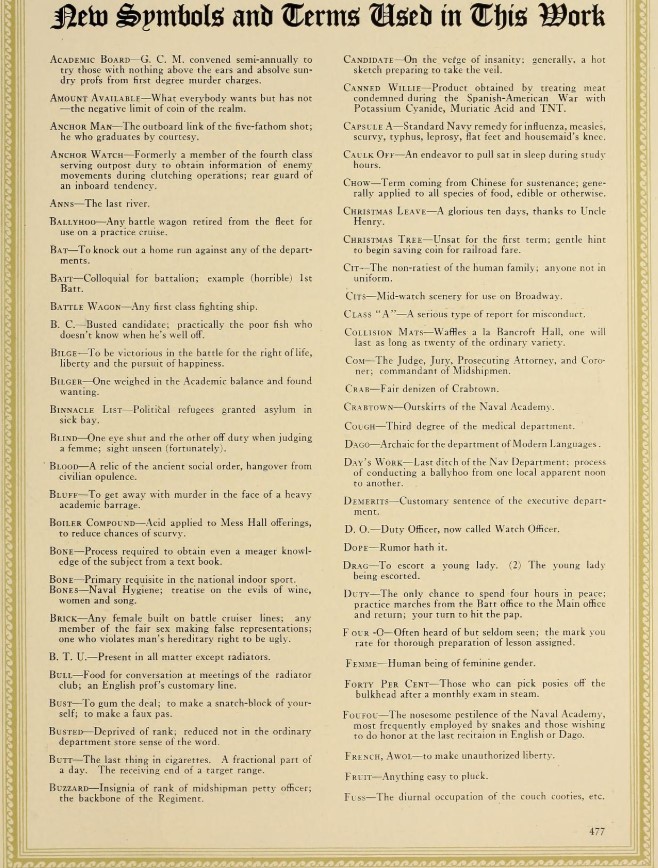
1923 slang terms from the US Naval Academy
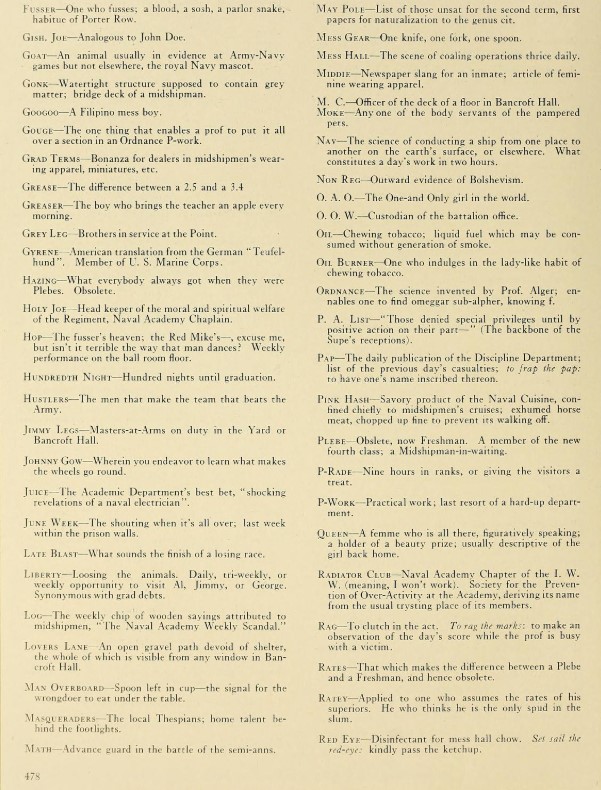
1923 slang terms
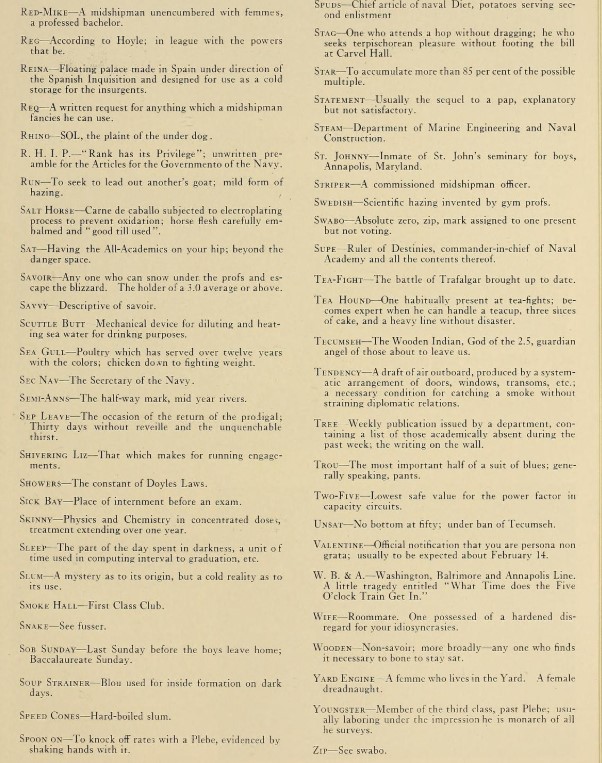
1923 slang terms
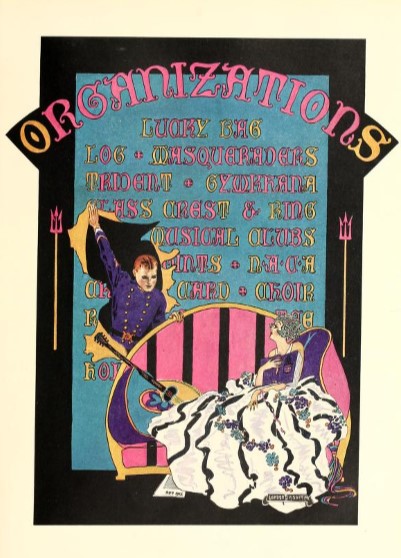
Title illustration for the Organizations section of the 1924 Lucky Bag.
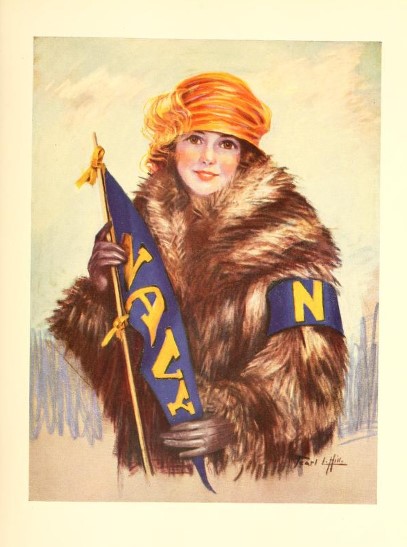
A Navy sweetheart, 1924
I have enjoyed going over this book over the last few weeks, but since it is all available online, I think it can safely leave and go on to entertain someone else!
If you would like to know more, here is a History of The Lucky Bag.




OK, I can take a hint and won’t send you any of my old books. However, I did enjoy looking at this one.
I didn’t say I didn’t want MORE books, it’s just that I am trying to actually use the ones I have. 🙂 Last year I bought over 1000 books and magazines, all craft related, for $60. This year I just bought 12 boxes of beautiful hardcover coffee table books and novels for $4 total! I have to move something! 🙂
My father taught in a Boy’s Grammar School in the 50’s and 60’s and they put on a play each year with the female roles being played by boys. The scenery and costumes were not quite up to the navy standard but as I remember them the performances were good.
That is so interesting! I don’t have much knowledge of theatre — I do know that for centuries boys played all the parts, but that is about the extent of my knowledge. I was surprised the Naval Academy had any theatre at all, but I was so impressed by the effort that went into it. The articles in the various yearbooks even specify some of their special sound and lighting effects, and the details of the sets.
I am not really into theater either but that College really seesm to have done it properly.
That was a mind bender……bet they wouldn’t be ‘allowed’ to do that now…. You do know how to find them….wild books I mean 🙂
I know, I love the surprises that are in old books, things I would never have imagined! 🙂
This was an interesting read. I too am quite baffled by the jargon but I enjoyed the pictures 🙂
Books are treasures to be enjoyed and shared. I’m glad you had fun chasing the theatre productions. Soon you’ll be six pounds lighter.