The Trials of Courtship in 1862
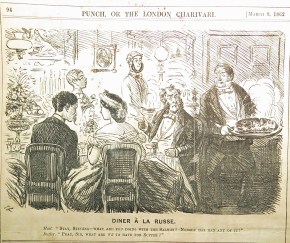
Well, since we all are enjoying these cartoons from the past, I will share some more. These are from Punch magazine, published in London from 1841 to 1992. These are from the 1862… Continue reading
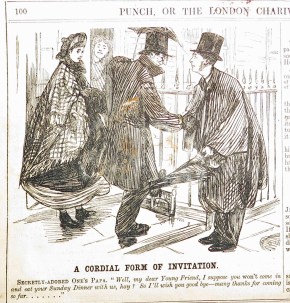
Well, since we all are enjoying these cartoons from the past, I will share some more. These are from Punch magazine, published in London from 1841 to 1992. These are from the 1862… Continue reading
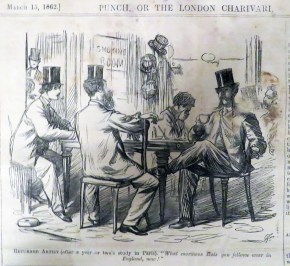
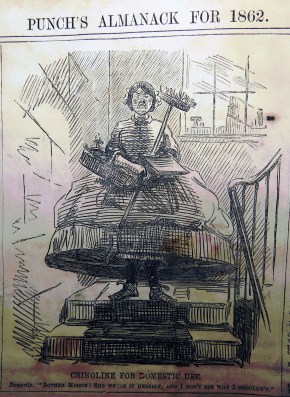
Here are a few more cartoons from Punch, in 1861 and 1862. One thing I like is that the cartoonists are sympathetic towards honest ignorance, and aim their wit mostly at pretension. I… Continue reading
Looking at my estate sale purchase, a bound issue of Punch from 1862, we see that gentlemen were not spared from the editors’ gibes …
Yesterday we went to an estate sale at a huge ranch. Thousands of items were being sold, but most of them were just ordinary things like throw pillows or boxes of glassware from… Continue reading
This week I had some time to set aside to just practicing free motion quilting, and I decided to work through the book Quilting Wide Open Spaces by Judi Madsen. (When I bought… Continue reading
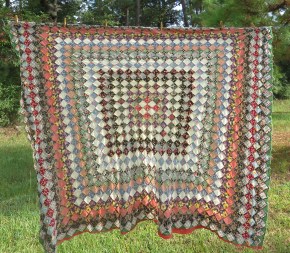
Three-fourths of the year is over! Time to report progress on the goals I set at the beginning of the year. √ 15 fused quilt blocks I am still making fused blocks of… Continue reading
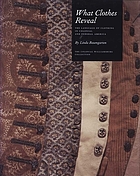
We had a little mini-vacation down on Galveston Island, and found a few treasures. First we came upon this bookstore — Where I found some wonderful books – After I bought them, I… Continue reading
You know the image of our industrious forebears — After studying textile history for the last 20 years, I had a hazy idea that that image casts our ancestors in a glorified light,… Continue reading
Yesterday I went to the Brazos Valley Quilt Guild show. At these small local shows, I love to shop in the White Elephant area – people have cleaned out their closets, the guild… Continue reading
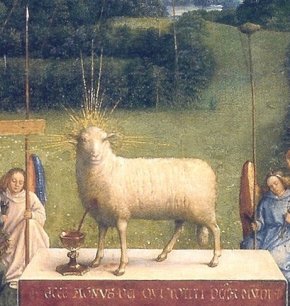
In the early 1960s, a young agriculture historian named M. L. Ryder had the idea to use parchment manuscripts to research medieval sheep breeds. He surveyed manuscript illuminations for evidence of the colors,… Continue reading